
Search Results (Searched for: gs swing arm)
GPZ550 or KZ550 Swing Arm/ Rear End Swap was created by jfarhanbod
29 Mar 2017 13:31 jfarhanbod
Has anyone swapped a more modern swingarm in? All my searches have led to some of the bigger bikes. I'd like to get a VFR or GSXR swing arm in there if possible but really anything that will allow me to run a wider rear tire would be perfect. With the stock 84 gpz550 swingarm, the 130/80/18 seems to be the max.
I know i can probably make anything fit in there but before I start ordering random expensive parts, it'd be nice to see if there's anything documented.
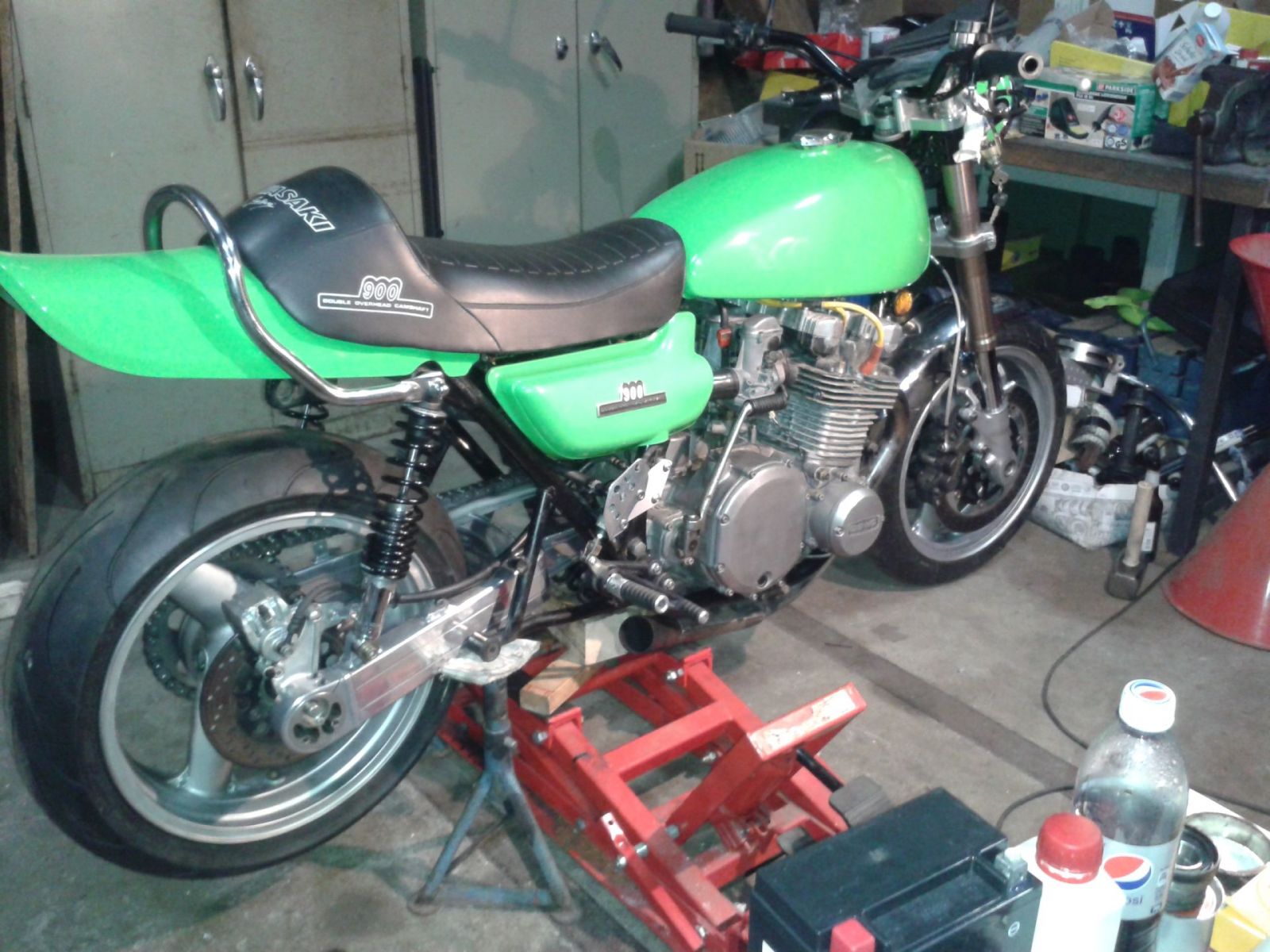
Here's a pic of the bike:

I know i can probably make anything fit in there but before I start ordering random expensive parts, it'd be nice to see if there's anything documented.
Here's a pic of the bike:
Understanding Unsprung Weight & Hardtail Effect was created by 650ed
27 Mar 2017 14:07 - 27 Mar 2017 14:09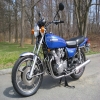 650ed
650ed
For anyone interested in how unsprung weight affects a bike here's part of a conversation I read...........
QUESTION
Dear Fred,
I hear people talking about unsprung weight and how important it is on a motorcycle, but I do not know what it is. How is it measured? What are its benefits of unsprung weight? Can a local guy like me feel the difference? If so, what can I do to get more of it?
ANSWER
First and foremost, you don’t want more of it. Here is a quick test that you can do in the comfort of your living room to see how unsprung weight affects a motorcycle. Stick your arms straight out. Rapidly lower them to your sides and back up again. Do it ten times. Do it fast. Now grab a 10-pound weight in each hand. Repeat. Feel the difference? Guess what? It takes serious effort to imitate the up-and-down motion of a bird with weight on each arm. If you are human (as opposed to avian), your arms moved slower and responded sluggishly when changing direction while holding the weights. Additionally, the strain of holding the weights could be felt in your shoulders. There is no doubt that you could move your arms quicker and with less stress if you didn’t have any extra weight attached to them.
Now, imagine your arms are your bike’s swingarm. The 10-pound weight mimics the mass of your bike’s wheel. Your arm is the swingarm, your shoulder socket is the swingarm pivot and your muscles are the shock absorbers. The increased muscle strain and sluggish reaction time that your body felt can be extrapolated over to the mechanical parts of your bike’s suspension. Extra weight on moving parts is a big no-no.
Extra weight that isn’t supported by the springs is called unsprung weight. There are three kinds of weight on a bike: sprung, unsprung, and hybrid.
Sprung Weight: The complete chassis, including all the parts that are suspended above the suspension’s springs, is considered “sprung” weight. That includes the frame, engine, plastic, controls, saddle, upper fork tubes and shock body, and rider. It’s called sprung weight because springs are used to hold it up and to isolate it from the bumps that the wheels hit.
Unsprung Weight: Unsprung weight is the mass that hangs below the springs (fork legs, hubs, brake calipers, rotors, spokes, rims, swingarm, linkage, tires, tubes and rim locks). Unsprung weight is more closely connected to the ground than the parts above it, because when you hit a bump, unsprung components compress toward the chassis to absorb the impact.
Hybrid Weight: One of the conundrums of calculating sprung and unsprung weight is the question of whether the shock and fork springs are one or the other. The answer is complicated, but it does have a definitive answer. While the chassis floats on the shock and fork springs as if the coils were part of the sprung mechanism, the wheels push into the springs as if they were part of the unsprung weight. Thus, the weight of the springs is split 50/50 between sprung and unsprung weight. Thus, the weight of the springs is different from sprung and unsprung weight; it is referred to as “hybrid weight.”
The discussion of whether the springs are sprung or unsprung leads us to question the status of the fork and shock fluids. Since the shock fluid is housed in the body of the shock absorber (and the shock body is bolted to the frame), it is sprung weight. It’s not as clear-cut with the front fork oil. More oil is used in the fork than the shock, and most of it resides down in the bottom of the fork legs. This fluid moves with the unsprung fork legs, brake parts, axle and front wheel — thus it is unsprung. The saving grace of fork oil is that it gets splashed around in the upper tube assemblies, lessening the amount that is actually unsprung. It’s best to presume that one-half of the fork oil is hybrid weight.
While on the subject of hybrid weight, the weight of the front brake hose is split between sprung and unsprung weight. Most of the rear hose is unsprung weight.
NEGATIVE EFFECTS OF WEIGHT BELOW THE SPRINGS
Your bike’s suspension is constantly moving. If it’s not compressing, it’s rebounding. At the top and bottom of the suspension’s stroke, whether fully bottomed, topped out or somewhere in between, the wheels must change direction as quickly as possible. The less weight hanging from the suspension components, the easier it is for the mass of the wheels to stop and accelerate in the opposite direction. It’s no secret that the quicker the wheel reacts, the better the suspension will be — otherwise the next bump is coming faster than the mechanism can respond.
It goes without saying that the less unsprung weight, the less strain will be placed on the pivots, springs and dampers. The lower the unsprung weight, the quicker the suspension reacts to bumps. The improvement is most significant over repetitious, high-frequency bumps (like braking and acceleration bumps). Why? The more weight you load on the wheels, the more the shock absorber has to struggle to bring the mass to a stop. As the damper struggles with the weight, the suspension packs, the wheels kick over the bumps and the bike becomes a handful.
Have you ever wondered why the shock body and fork stanchions are mounted on top of new, high performance units, instead of on the bottom like they were back in the 1970s? The designers turn the shock and forks upside-down to change the weight of the heaviest parts of the suspension into sprung weight. On the shock, this leaves only the shock shaft and spring collar below the spring. As for the forks, upside-down forks remove the cast stanchions away from the wheel.
Factory racing teams spend beaucoup bucks to reduce unsprung weight. Most works bikes have magnesium hubs, titanium linkage bolts, Ti axles, aluminum spoke nipples, tapered and butted spokes, and magnesium (or beryllium) brake calipers.
HARDTAIL
In light of the facts stated above, anyone considering making their bike a hardtail should consider this - since the rear of hardtail bike has no rear shocks. springs, or other suspension parts that would provide sprung weight, all the weight on the rear wheel is undesirable unsprung weight. That is why hardtail bikes do not handle bumps, braking, etc. as well as bikes that have a sprung rear suspension. Ed
QUESTION
Dear Fred,
I hear people talking about unsprung weight and how important it is on a motorcycle, but I do not know what it is. How is it measured? What are its benefits of unsprung weight? Can a local guy like me feel the difference? If so, what can I do to get more of it?
ANSWER
First and foremost, you don’t want more of it. Here is a quick test that you can do in the comfort of your living room to see how unsprung weight affects a motorcycle. Stick your arms straight out. Rapidly lower them to your sides and back up again. Do it ten times. Do it fast. Now grab a 10-pound weight in each hand. Repeat. Feel the difference? Guess what? It takes serious effort to imitate the up-and-down motion of a bird with weight on each arm. If you are human (as opposed to avian), your arms moved slower and responded sluggishly when changing direction while holding the weights. Additionally, the strain of holding the weights could be felt in your shoulders. There is no doubt that you could move your arms quicker and with less stress if you didn’t have any extra weight attached to them.
Now, imagine your arms are your bike’s swingarm. The 10-pound weight mimics the mass of your bike’s wheel. Your arm is the swingarm, your shoulder socket is the swingarm pivot and your muscles are the shock absorbers. The increased muscle strain and sluggish reaction time that your body felt can be extrapolated over to the mechanical parts of your bike’s suspension. Extra weight on moving parts is a big no-no.
Extra weight that isn’t supported by the springs is called unsprung weight. There are three kinds of weight on a bike: sprung, unsprung, and hybrid.
Sprung Weight: The complete chassis, including all the parts that are suspended above the suspension’s springs, is considered “sprung” weight. That includes the frame, engine, plastic, controls, saddle, upper fork tubes and shock body, and rider. It’s called sprung weight because springs are used to hold it up and to isolate it from the bumps that the wheels hit.
Unsprung Weight: Unsprung weight is the mass that hangs below the springs (fork legs, hubs, brake calipers, rotors, spokes, rims, swingarm, linkage, tires, tubes and rim locks). Unsprung weight is more closely connected to the ground than the parts above it, because when you hit a bump, unsprung components compress toward the chassis to absorb the impact.
Hybrid Weight: One of the conundrums of calculating sprung and unsprung weight is the question of whether the shock and fork springs are one or the other. The answer is complicated, but it does have a definitive answer. While the chassis floats on the shock and fork springs as if the coils were part of the sprung mechanism, the wheels push into the springs as if they were part of the unsprung weight. Thus, the weight of the springs is split 50/50 between sprung and unsprung weight. Thus, the weight of the springs is different from sprung and unsprung weight; it is referred to as “hybrid weight.”
The discussion of whether the springs are sprung or unsprung leads us to question the status of the fork and shock fluids. Since the shock fluid is housed in the body of the shock absorber (and the shock body is bolted to the frame), it is sprung weight. It’s not as clear-cut with the front fork oil. More oil is used in the fork than the shock, and most of it resides down in the bottom of the fork legs. This fluid moves with the unsprung fork legs, brake parts, axle and front wheel — thus it is unsprung. The saving grace of fork oil is that it gets splashed around in the upper tube assemblies, lessening the amount that is actually unsprung. It’s best to presume that one-half of the fork oil is hybrid weight.
While on the subject of hybrid weight, the weight of the front brake hose is split between sprung and unsprung weight. Most of the rear hose is unsprung weight.
NEGATIVE EFFECTS OF WEIGHT BELOW THE SPRINGS
Your bike’s suspension is constantly moving. If it’s not compressing, it’s rebounding. At the top and bottom of the suspension’s stroke, whether fully bottomed, topped out or somewhere in between, the wheels must change direction as quickly as possible. The less weight hanging from the suspension components, the easier it is for the mass of the wheels to stop and accelerate in the opposite direction. It’s no secret that the quicker the wheel reacts, the better the suspension will be — otherwise the next bump is coming faster than the mechanism can respond.
It goes without saying that the less unsprung weight, the less strain will be placed on the pivots, springs and dampers. The lower the unsprung weight, the quicker the suspension reacts to bumps. The improvement is most significant over repetitious, high-frequency bumps (like braking and acceleration bumps). Why? The more weight you load on the wheels, the more the shock absorber has to struggle to bring the mass to a stop. As the damper struggles with the weight, the suspension packs, the wheels kick over the bumps and the bike becomes a handful.
Have you ever wondered why the shock body and fork stanchions are mounted on top of new, high performance units, instead of on the bottom like they were back in the 1970s? The designers turn the shock and forks upside-down to change the weight of the heaviest parts of the suspension into sprung weight. On the shock, this leaves only the shock shaft and spring collar below the spring. As for the forks, upside-down forks remove the cast stanchions away from the wheel.
Factory racing teams spend beaucoup bucks to reduce unsprung weight. Most works bikes have magnesium hubs, titanium linkage bolts, Ti axles, aluminum spoke nipples, tapered and butted spokes, and magnesium (or beryllium) brake calipers.
HARDTAIL
In light of the facts stated above, anyone considering making their bike a hardtail should consider this - since the rear of hardtail bike has no rear shocks. springs, or other suspension parts that would provide sprung weight, all the weight on the rear wheel is undesirable unsprung weight. That is why hardtail bikes do not handle bumps, braking, etc. as well as bikes that have a sprung rear suspension. Ed
Replied by 531blackbanshee on topic kz1000/1100 swing arm
27 Mar 2017 11:51 531blackbanshee
thick washer type bushings should be fine.
how will you go about lengthening your drive shaft?
leon
how will you go about lengthening your drive shaft?
leon
Replied by G-tron on topic kz1000/1100 swing arm
27 Mar 2017 10:24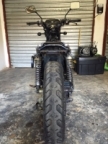 G-tron
Hi ok so I"ve tracked down a kz1100 swingarm.
it's 30mm longer than the 750 shafts swing arm. Just have to make it fit now. It measures 275mm at the pivot point. The 750 stocker is 290mm. Anyone have some examples of how to go about making bushings to take up the difference?
thanks
it's 30mm longer than the 750 shafts swing arm. Just have to make it fit now. It measures 275mm at the pivot point. The 750 stocker is 290mm. Anyone have some examples of how to go about making bushings to take up the difference?
thanks
Replied by Scirocco on topic New rebuild after 10 years "deep sleep" mode
15 Mar 2017 16:34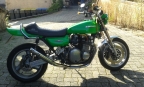 Scirocco
All in, new front and rear wheel bearings and quick swing arm polish.
sorry for blurry handy pic.
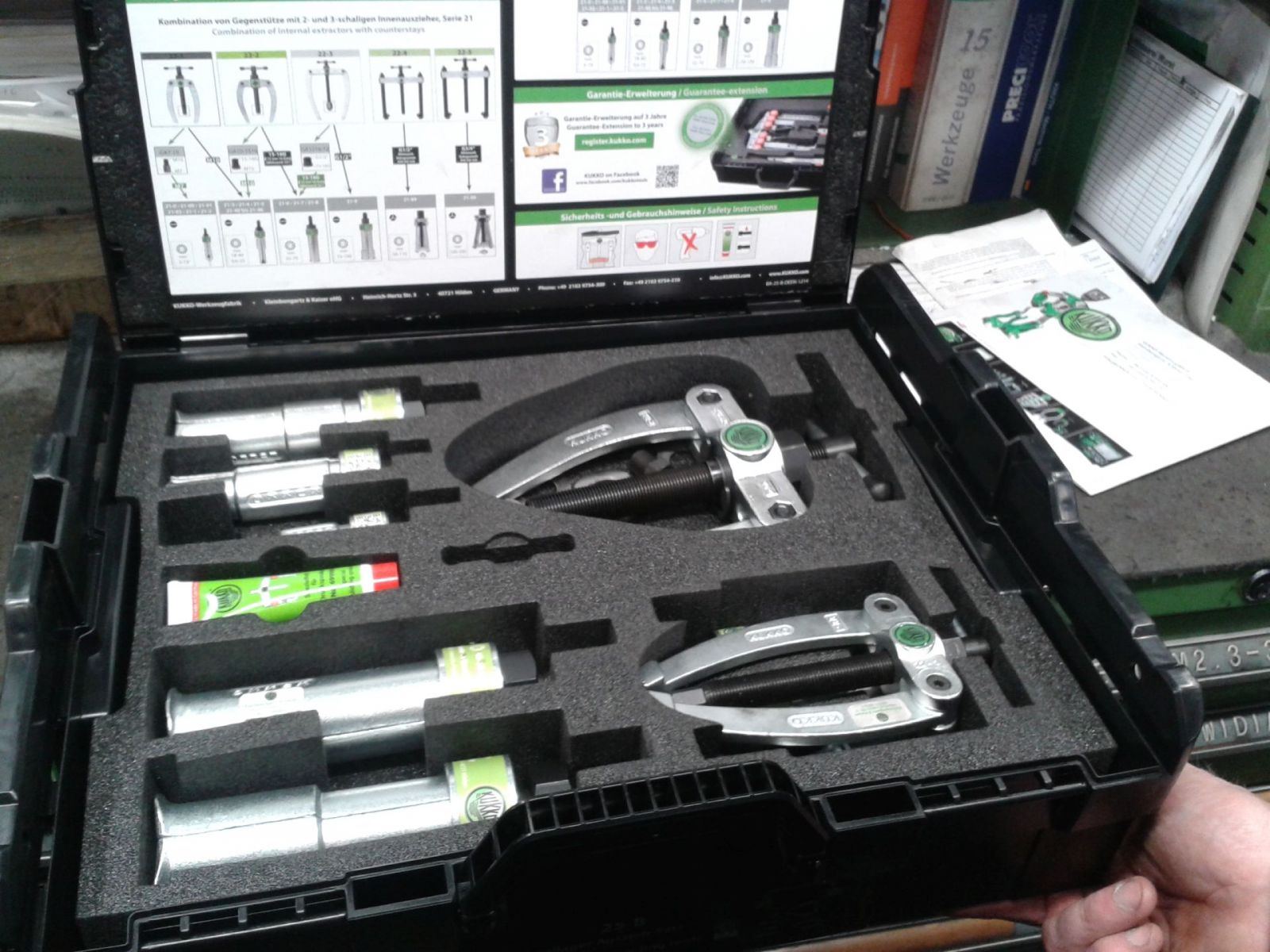
btw, here is the bearing puller set i used.
Michael
sorry for blurry handy pic.
btw, here is the bearing puller set i used.
Michael
Replied by Scirocco on topic New rebuild after 10 years "deep sleep" mode
15 Mar 2017 16:12 - 15 Mar 2017 16:13
Scirocco
with the force of elbow grease, the swing arm get some little polish,(some groves and dots are left but i will do it later).
I hate polishing things because this is one of the few skills i have to learn.
Any advise in polishing aluminum parts are welcome
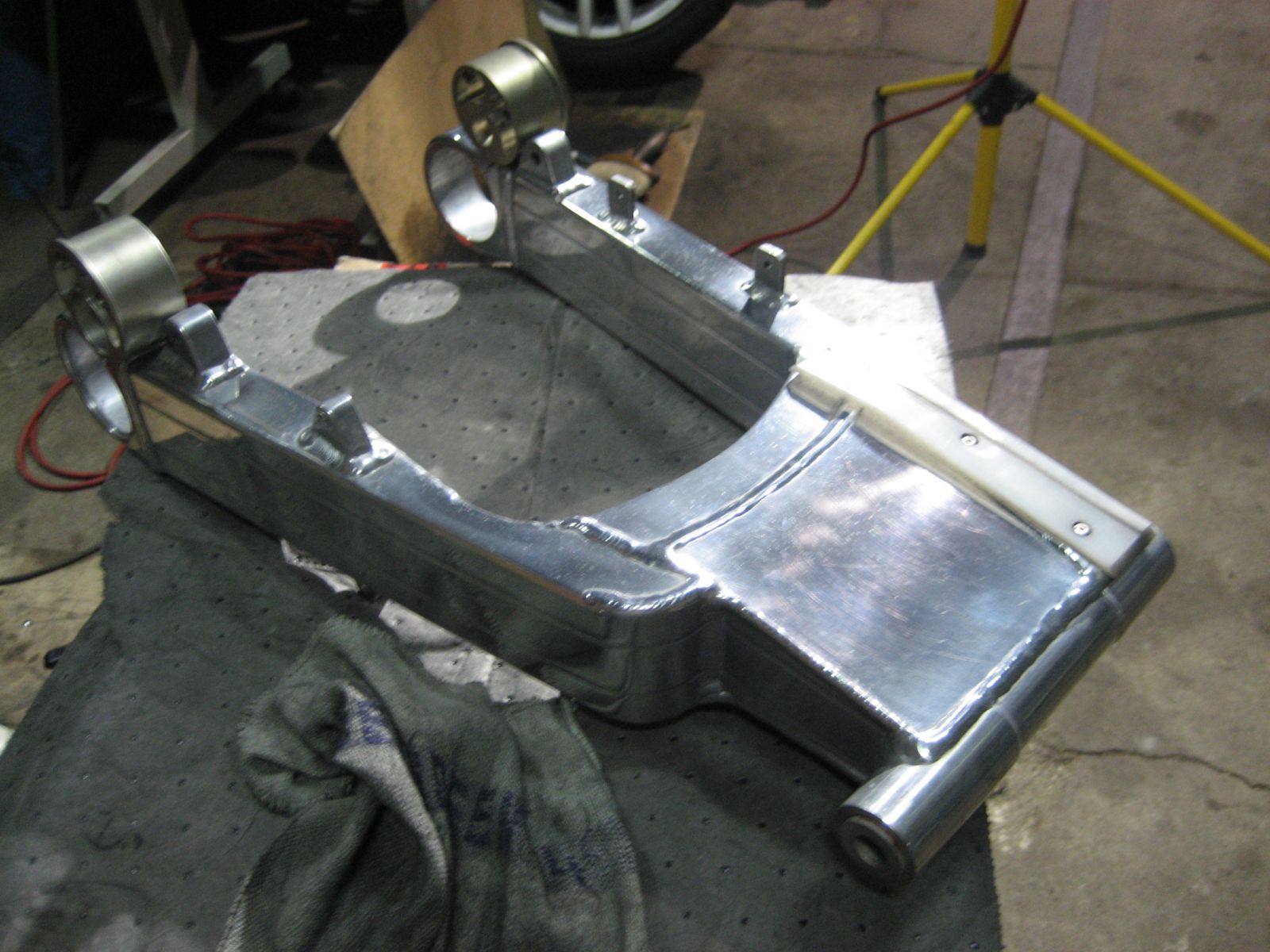
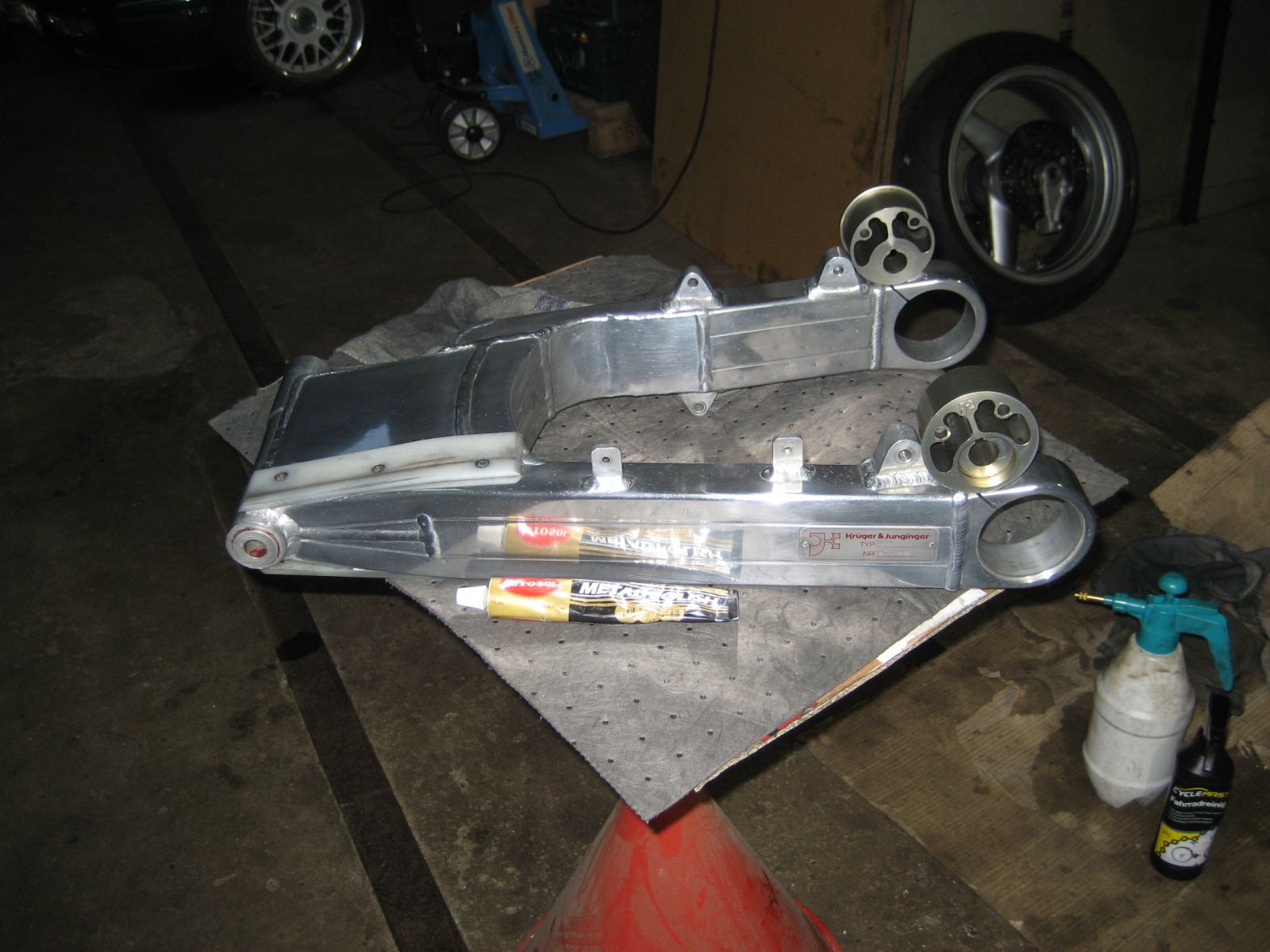
I hate polishing things because this is one of the few skills i have to learn.
Any advise in polishing aluminum parts are welcome
Replied by Scirocco on topic New rebuild after 10 years "deep sleep" mode
15 Mar 2017 16:01 - 15 Mar 2017 16:02
Scirocco
some progress in my project
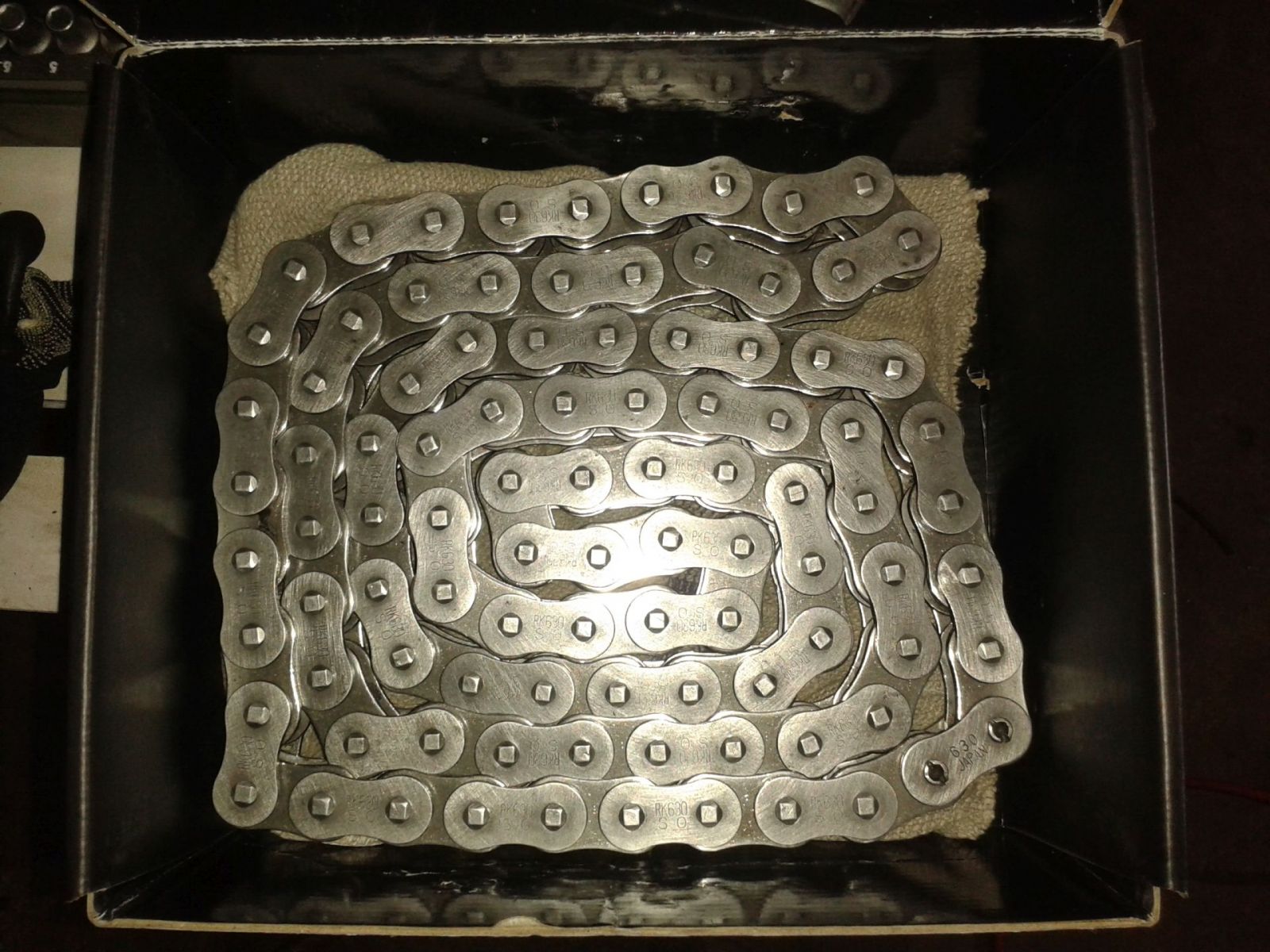
chain cleaned
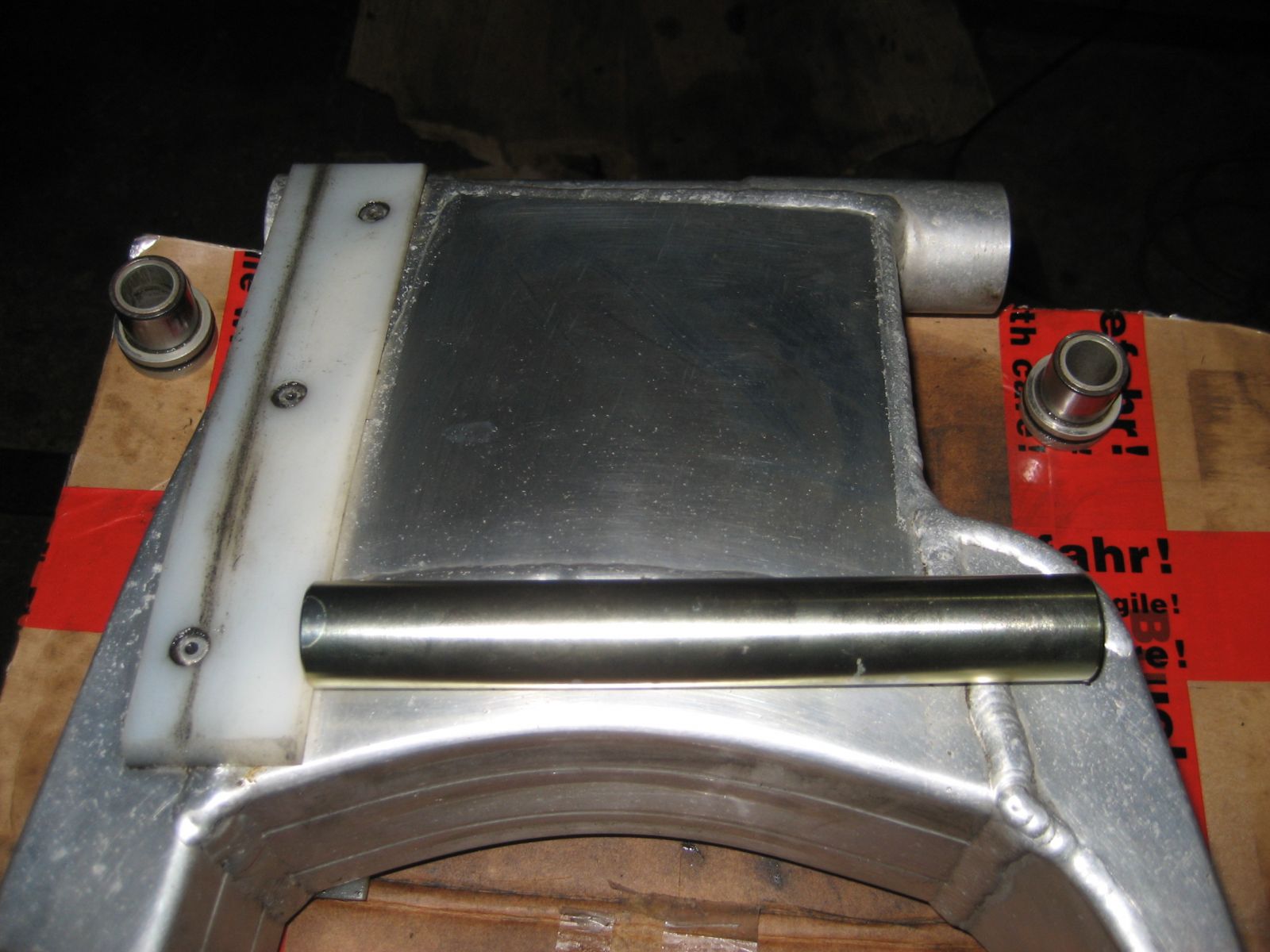
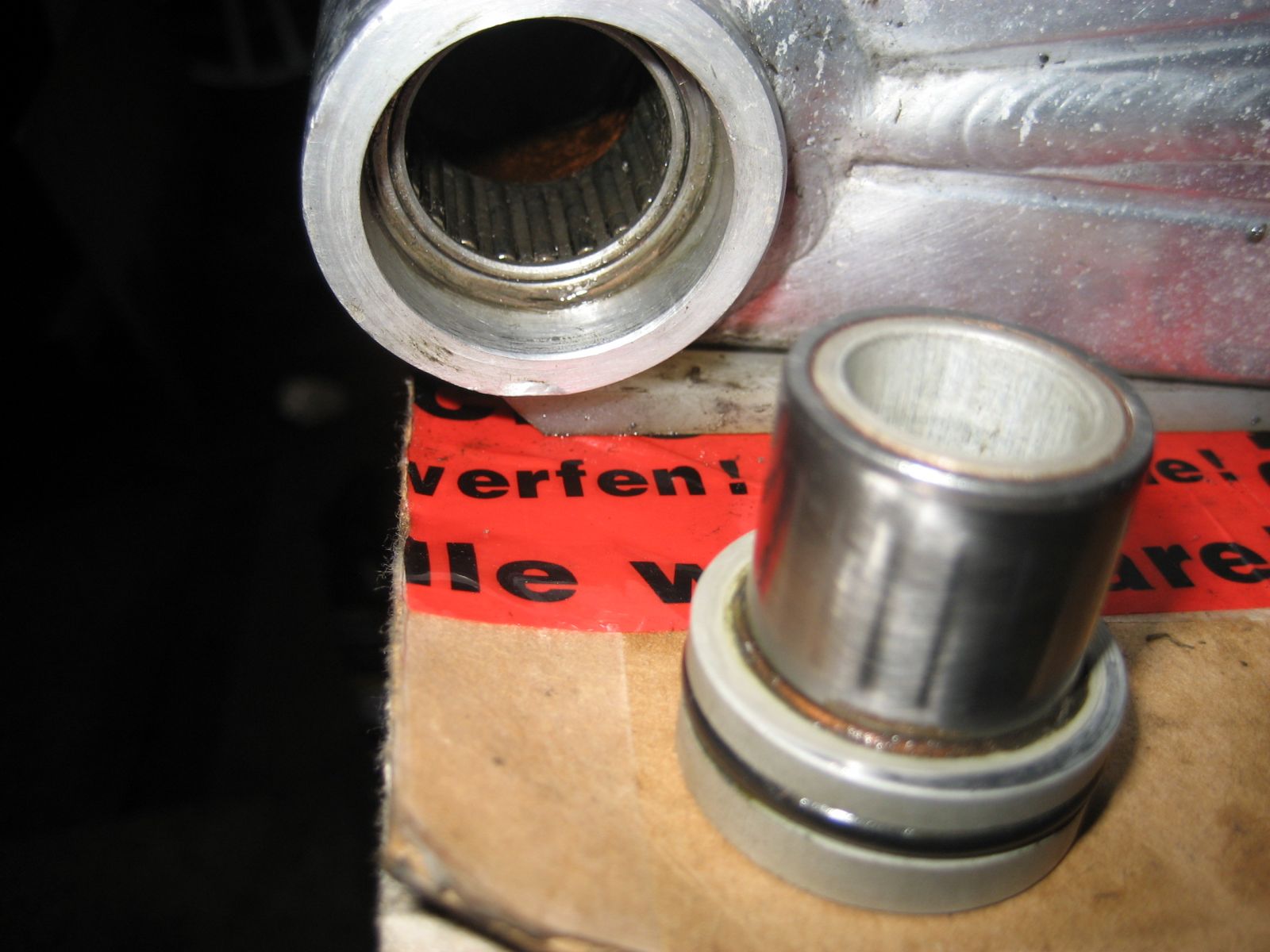
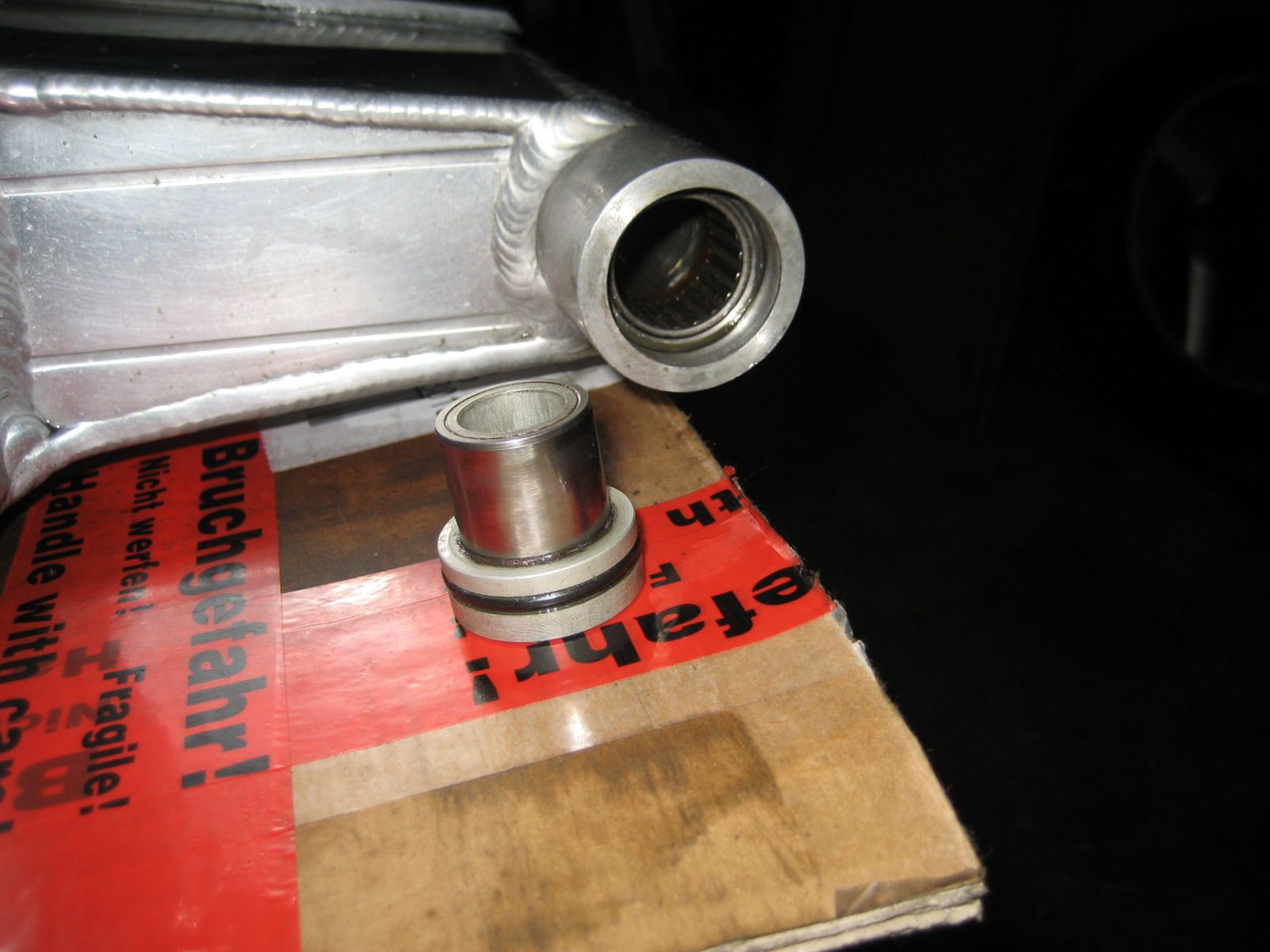
swing arm bearings checked and greased (left side bearing have some little marks from the chain force, right side is in really good condition).
chain cleaned
swing arm bearings checked and greased (left side bearing have some little marks from the chain force, right side is in really good condition).
Replied by HeavenlyMachines on topic GPz750 R1 wobbles under hard acceleration
13 Mar 2017 20:07 HeavenlyMachines
barney wrote: It kind of sounds like swingarm pivot to me .
Scirocco wrote: You have to check the rear/front wheel bearings,air pressure in the tires,steering neck bearings,fork oil level,acts the
bike with different (soft/medium) rear suspension set the same? Steering damper installed?
Under hard acceleration the swing arm bushes are not in the same condition as proof by hand.
Thanks. It seems like I have to check everything carefully and might do this when painting the swing arm.
Replied by Scirocco on topic GPz750 R1 wobbles under hard acceleration
13 Mar 2017 06:24 - 13 Mar 2017 06:25
Scirocco
You have to check the rear/front wheel bearings,air pressure in the tires,steering neck bearings,fork oil level,acts the
bike with different (soft/medium) rear suspension set the same? Steering damper installed?
Under hard acceleration the swing arm bushes are not in the same condition as proof by hand.
bike with different (soft/medium) rear suspension set the same? Steering damper installed?
Under hard acceleration the swing arm bushes are not in the same condition as proof by hand.
Replied by Wildman1024 on topic Best bang for buck mods for 81 KZ550?
12 Mar 2017 09:13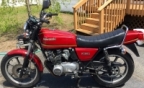 Wildman1024
loudhvx wrote: I never noticed any difference between the gpz head and a kz head, but maybe there is some porting done (that was the rumor according to magazine articles, but I don't give that much weight considering how much else they get wrong). Obviously, since the gpz and kz use the same carbs, the inlet of the intake ports have to be the same. Maybe Kawasaki ported the heads on the bike that was lent out for reviews (the kz came out 1 year before the gpz, so magazines would have been able to inspect/compare the gpz test bike against a showroom kz).
The Zx 550 motor uses the same Kz550D (81 gpz) cases. The motor mounts are different on the Zx. It has more rubber mounting, but I think the motor is compatible to a Kz frame. Either way, the 82/83 motor bolts in. That's what I have in one of my 81's.
But I am also of the opinion you should keep the bike with the good motor in it. Once you change the motor, you will want the gpz brakes/wheels.
If your bike is running perfectly, I (like Nessism said) would leave it in tact. Just look for a hashed out project bike to play with. There are always plenty of bobbed/chopped incomplete bikes on craigslist for cheap. It would be great to see a chopped up Ltd become a decent gpz replica.
I have 3 bikes. One is a really nice kz650. I prefer not to perm mod that bike. My other bike is a 73 rd350. I have a lot done to that bike and it's on it's way out to have the motor all redone etc.
My 3 rd bike is this 81 kz550. It is a decent running bike and I rode it a few thousand miles last year as my primary bike. I have recently upgraded it to gpz forks and dual disk brakes up front. In the back it now has a gpz swing arm and rear disc brake wheel. I have a front fork brace for the bike also. Just ordered some exhaust from japan also. It's a good running bike but just wanted to give it a little extra. Not trying to make a superbike out of it. But if I could make another 5-10hp I would be plenty happy with it.
Does the 84-85 65hp motor bolt in?
Displaying 801 - 810 out of 7257 results.