
NEW ZDDP additive from Lucas Oil
- otakar
-
 Topic Author
- Offline
- User
-

Registered
- Posts: 5073
- Thanks: 29
Re: NEW ZDDP additive from Lucas Oil
30 Jul 2010 05:56
I am a relatively new convert to Rotella (about 1 year) but I have always been a believer in strong and good additive packages. The ZDDP problem has been around since 2007 but has been discovered by the "engine" guys about late 2008. I myself was enlightened about April of 2009. I was lucky, because I discovered this before I did my GPz1150 build. That was July of last year. There were a bunch of guys on this sight that were not as fortunate and have payed with some costly engine problems. What I used before that was Wall-Mart synthetic with a lot of extra additives since about 2004 when I discovered Wall-Mart oil which is actually Pennzoil-Quaker State about 2004. Before that I used Castrol Syntec. But there was not a problem with oil additive packages before 2007. You will find these same problems with gas also. Every bike we ride would have had a void Warranty with modern gas. Kawasaki USA expressly warned against use of gasoline with alcohol content back in 1978/79. "Gasohol" as it used to be called back than. They found out that there was an inordinate amount of carburetor problems back than and internal engine corrosion. Today, most of us do not have a choice. There are a lucky few who can still find ethanol free gas. This is why I am also a strong proponent of fuel additives and would not run without them.
74 Z1-A stock
76 KZ-900 Totaly stock vice MAC pipe
77 KZ-1000A stock
78 Z1-R 100%MINT 500 original Mi.
78 Z1-R Yoshi 1103 kit stage 1 cams Yoshi pipe. Etc
79 KZ-1300 (1400)
80 KZ-1300
81 Scratch built GPz1150R
82 KZ1000
76 KZ-900 Totaly stock vice MAC pipe
77 KZ-1000A stock
78 Z1-R 100%MINT 500 original Mi.
78 Z1-R Yoshi 1103 kit stage 1 cams Yoshi pipe. Etc
79 KZ-1300 (1400)
80 KZ-1300
81 Scratch built GPz1150R
82 KZ1000
Please Log in or Create an account to join the conversation.
- otakar
-
Topic Author
- Offline
- User
-
Registered
- Posts: 5073
- Thanks: 29
Re: NEW ZDDP additive from Lucas Oil
13 Aug 2010 19:59
Here is a very nice update.
www.aa1car.com/library/api_motor_oil_classifications.htm
www.aa1car.com/library/api_motor_oil_classifications.htm
74 Z1-A stock
76 KZ-900 Totaly stock vice MAC pipe
77 KZ-1000A stock
78 Z1-R 100%MINT 500 original Mi.
78 Z1-R Yoshi 1103 kit stage 1 cams Yoshi pipe. Etc
79 KZ-1300 (1400)
80 KZ-1300
81 Scratch built GPz1150R
82 KZ1000
76 KZ-900 Totaly stock vice MAC pipe
77 KZ-1000A stock
78 Z1-R 100%MINT 500 original Mi.
78 Z1-R Yoshi 1103 kit stage 1 cams Yoshi pipe. Etc
79 KZ-1300 (1400)
80 KZ-1300
81 Scratch built GPz1150R
82 KZ1000
Please Log in or Create an account to join the conversation.
- bountyhunter
-

- Offline
- User
-
Registered
- Posts: 7245
- Thanks: 338
Re: NEW ZDDP additive from Lucas Oil
13 Aug 2010 22:40
Maybe we should post this as a sticky:
lower ZDDP content is not harmful to late model engines with roller lifters or followers because the loads are much lower on the camshaft lobes. But on pushrod engines with flat tappet cams, the level of ZDDP may be inadequate to prevent cam lobe and lifter wear.
To avoid such problems, you should add a ZDDP additive to the crankcase, or use an oil that meets the previous "SL" service rating, or use diesel motor oil or racing oil that contains adequate levels of ZDDP to protect the camshaft and lifters.
1979 KZ-750 Twin
Please Log in or Create an account to join the conversation.
- otakar
-
Topic Author
- Offline
- User
-
Registered
- Posts: 5073
- Thanks: 29
Re: NEW ZDDP additive from Lucas Oil
14 Aug 2010 05:32 - 14 Aug 2010 05:40
Not exactly suer what that means. This problem may also be even more "deceivingly" more serious. Many people think that if they use "motorcycle specific" oils they will be covered. Since the loads on modern "four valve per cylinder" heads are much lower then on our older heads and cams, these believers are grossly mistaken. These modern heads have much lower spring loads because of the smaller and lighter springs required for the small valves. Also the cam lift on these engines is much lower. Also one MUCH OVERLOOKED fact is that modern bikes run MUCH MUCH higher oil pressures than our engines which utilize roller cranks and only have 3psi oil pressure. Too many people make light of this subject on this web sight until it is too late, and than it gets very costly. Many people (as actually stated) presume that if they use expensive oil they are covered. This is a GROSS misconception.
There is also one more never mentioned (because it is never thought of) benefit to Zinc in your oil. Zinc as other heavy metals is also an octane booster. Meaning that the small amount that winds being run threw your combustion chamber will act as such. Along with the detriment of fowling out your plugs. Yes there are side effects, just like in medication. The question is; Is the cure worse than the disease? Personally I would rather change my plugs every 5000 Mi. than my cams and shims, and possibly other components.
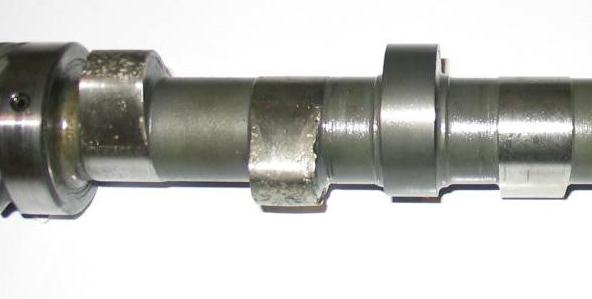
Here is actually someone who found out the hard way. This was after he thought that he broke in the engine properly. "What an unnecessary waste" Read the article and understand his findings.
www.netbug.net/blogmichael/?p=49
There is also one more never mentioned (because it is never thought of) benefit to Zinc in your oil. Zinc as other heavy metals is also an octane booster. Meaning that the small amount that winds being run threw your combustion chamber will act as such. Along with the detriment of fowling out your plugs. Yes there are side effects, just like in medication. The question is; Is the cure worse than the disease? Personally I would rather change my plugs every 5000 Mi. than my cams and shims, and possibly other components.
Here is actually someone who found out the hard way. This was after he thought that he broke in the engine properly. "What an unnecessary waste" Read the article and understand his findings.
www.netbug.net/blogmichael/?p=49
74 Z1-A stock
76 KZ-900 Totaly stock vice MAC pipe
77 KZ-1000A stock
78 Z1-R 100%MINT 500 original Mi.
78 Z1-R Yoshi 1103 kit stage 1 cams Yoshi pipe. Etc
79 KZ-1300 (1400)
80 KZ-1300
81 Scratch built GPz1150R
82 KZ1000
76 KZ-900 Totaly stock vice MAC pipe
77 KZ-1000A stock
78 Z1-R 100%MINT 500 original Mi.
78 Z1-R Yoshi 1103 kit stage 1 cams Yoshi pipe. Etc
79 KZ-1300 (1400)
80 KZ-1300
81 Scratch built GPz1150R
82 KZ1000
Last edit: 14 Aug 2010 05:40 by otakar.
Please Log in or Create an account to join the conversation.
- T_Dub
-

- Offline
- User
-
Registered
- Posts: 1445
- Thanks: 25
Re: NEW ZDDP additive from Lucas Oil
14 Aug 2010 12:57
You know what's funny, I remember last year when his engine blew up. I marshal a couple stages of Targa Newfoundland every year, too bad I'll miss it this year.
All the same, these cams are usually welded stockers, no? I'd be more likely to put down these random cam failures to poor post weld heat treatment. Seems far too mythical for my liking, and I have yet to find any concrete evidence that the lack of ZDDP was the culprit. Combined with the fact that I've found a lot of papers debunking this myth, I'd say there's not a lot of truth to it.
I even read a tech brief from ZDDPlus which had a lot of language like "it is our belief" etc. If a company who makes these additives can only call on one old paper linking Zn and P to reduced wear, then my opinion as a person who will be a mechanical engineer in april with experience in real automotive research is as follows: this is a money grab by people who are good at marketing to the primarily poorly educated masses of the antique automobile world. I think it has little else to it than that.
Most modern oils are engineered to give as little wear as possible, under all conditions. I trust them.
All the same, these cams are usually welded stockers, no? I'd be more likely to put down these random cam failures to poor post weld heat treatment. Seems far too mythical for my liking, and I have yet to find any concrete evidence that the lack of ZDDP was the culprit. Combined with the fact that I've found a lot of papers debunking this myth, I'd say there's not a lot of truth to it.
I even read a tech brief from ZDDPlus which had a lot of language like "it is our belief" etc. If a company who makes these additives can only call on one old paper linking Zn and P to reduced wear, then my opinion as a person who will be a mechanical engineer in april with experience in real automotive research is as follows: this is a money grab by people who are good at marketing to the primarily poorly educated masses of the antique automobile world. I think it has little else to it than that.
Most modern oils are engineered to give as little wear as possible, under all conditions. I trust them.
1977 KZ650B1
-810cc
-Cavanaugh Racing Head
-Mikuni RS34's
-GPR Muffler
-810cc
-Cavanaugh Racing Head
-Mikuni RS34's
-GPR Muffler
Please Log in or Create an account to join the conversation.
- steell
-

- Offline
- User
-
Registered
- Posts: 6849
- Thanks: 208
Re: NEW ZDDP additive from Lucas Oil
14 Aug 2010 14:40
Here's what Royal Purple has to say:
www.universityofjeep.ca/forums/archive/index.php/t-15749.html
If you disagree, email David, not me.
Interesting one up next, actual test results and info on how to do your own tests.
Go to the site to view the actual reports and read the rest of it.
www.ctci.org/gilsgarage/EngineOil2.php
Still trying to find some indication that EPA required the removal of "ALL" ZDDP. No joy so far
Brian,
ZDDP has been reduced in API SM rated oils in lighter viscosity grades from 1100 ppm in the SL to 800 ppm cap in SM 0W20, 5W20, 0W30, 5W30, and 10W30.
That is why RP has not 'upgraded' to the API SM in these oils.
ZDDP has been reduced from 1300 in a CI-4+ / SL 15W40 to the 1100 ppm cap for a CJ-4 rated diesel oil. That is why RP 10w40 and RP 15W40 are still CI-4 ratings.
RP has not reduced any levels of ZDDP in our oils.
The EPA has not mandated that all ZDDP be removed - it is being reduced to theoretically prolong the exhaust system components (cat).
RP has not had a single claim of using the RP API SL rated oils in vehicles calling out the newer (post 2005) API SM oils.
For older flat tappet cam engines, the RP 10W40 or RP 15W40 are ideal due to the more robust antiwear package.
If budget allows, the RP XPR Series are the most robust oils that we make with more than 1600 ppm of ZDDP.
Caution about using ZDDP supplements or additives - over treating an engine oil with excessive amounts of antiwear additives can lead to excessive valve train deposits, ring sticking, etc.
Cheers,
David
David Canitz
Tech Services
Royal Purple Inc.
1 Royal Purple lane
Porter, TX 77365
281.354.8600
713.725.7207 cell
dcanitz@royalpurple.com
www.universityofjeep.ca/forums/archive/index.php/t-15749.html
If you disagree, email David, not me.
Interesting one up next, actual test results and info on how to do your own tests.
Eight 4oz oil samples (four brands of oil and four different additives) were sent to Blackstone Laboratories, 415 E. Pettit Ave, Fort Wayne In, Ph 260 744 2380, www.blackstone-labs.com
1. First, to establish a base line, I started with a1980s vintage "Pennzoil" 10W/40 it contained 547 PPM Phosphorus and 716 PPM Zinc. This was one of the popular oils widely available and used in the 80s. It had adequate ZDDP content for flat tappet engines. View Report (PDF)
2. The next oil checked was the older version of "Shell Rotella" T, 15W/40; it contained 1133 PPM Phosphorus and 1276 PPM Zinc. Double the amount of the 1980s Pennzoil. View Report (PDF)
3. Next was the current "Shell Rotella" T, 15W/40. It contained 944 PPM Phosphorus and 1133 PPM Zinc. You can see that the ZDDP content has been slightly reduced, but not enough to worry about because it is still almost double the 1980s vintage oil. View Report (PDF)
4. Next was "Red Line" racing oil, 10W/40 it contained 1968 PPM Phosphorus and 1180 PPM Zinc. Again close to double the 1980s vintage oil. Very good oil for older engines.
Go to the site to view the actual reports and read the rest of it.
www.ctci.org/gilsgarage/EngineOil2.php
Still trying to find some indication that EPA required the removal of "ALL" ZDDP. No joy so far
KD9JUR
Please Log in or Create an account to join the conversation.
- bountyhunter
-
- Offline
- User
-
Registered
- Posts: 7245
- Thanks: 338
Re: NEW ZDDP additive from Lucas Oil
14 Aug 2010 14:51
Article with some good info:
www.precisionenginetech.com/tech-explain...he-right-oil-part-1/
Avoiding flat tappet cam failure can be as simple as using the correct oil during break-in.
Chances are you’ve run into this problem first-hand, or know a builder who has shared his horror stories. We’re talking about flat tappet camshaft failures during break-in. In recent years, there has been a rash of cam problems and, in too many cases, the cam makers have unjustifiably shouldered the blame. The problem does not lie with the camshafts. Rather, the problem is caused by the engine oil used during break-in.
Because of mandates by the EPA, a vital element of the oil mix, commonly called ZDDP, has been drastically reduced in standard engine oils that are intended for the late-model street vehicle. In short, if the oil doesn’t contain enough ZDDP, it doesn’t offer adequate anti-scuff protection for the initial break-in of flat tappet cams. Let’s face it, when a customer’s brand new cam gets wiped out through no fault of yours, life can be frustrating to say the least.
ZDDP (zinc dialkyl dithio phosphate) is an anti-wear and antioxidant, initially developed in 1930 as an antioxidant to prevent engine bearing corrosion. ZDDP also features excellent anti-scuff and anti-wear properties. In the 1960s, ZDDP featured a zinc level of 0.07 percent when high-performance flat tappet camshafts were common. At that time, new camshafts were phosphate coated as well and the combination worked well to protect new camshafts and lifters from premature wear, especially during break-in.
In the 1970s, zinc levels increased to 0.09 percent because ZDDP is an excellent antioxidant. As engines became more powerful, oil recipes changed as well, becoming more complex with more functional additives such as friction modifiers, antioxidants, detergents, etc. Friction modifiers gained further popularity to aid fuel economy, with zinc content increasing to 0.2 percent in the 1980s and early 1990s.
By the way, ZDDP is only one acronym for this anti-wear/antioxidant content. It’s also referred to as ZDP or ZZDP. Why? Who knows and who cares?
So if ZDDP is so cool, why has it been reduced to the point where it’s causing flat tappet cam problems? Phosphorous is a well-known contamination source for catalytic converters (some refer to it as converter poison). The limit for phosphorous dropped to 0.10 percent, which means that the zinc level dropped as well. In 2004, with Tier 2 emissions standards, OEM warranties changed to 10 year/100,000 miles, and phosphorous dropped again to 0.08 percent, with zinc down to 0.09 percent.
Engine oils, in general, are vastly superior to oils made in the past, a major factor responsible for some engines being able to last for 250,000 miles or so. Also, today’s metallurgy is better. The issue here is high-performance flat tappet cam lobe wear during the break-in period. Aggressive cams with high spring loads compound the problem. This issue does not affect roller cams, since there’s no scuff wear issue with rollers.
In a nutshell, whether in a direct or indirect manner, the EPA has told the oil makers to ignore older (i.e. flat tappet cam) engines and to make an oil that avoids converter damage (thereby reducing emissions) in late model cars, and the hell with the restoration and performance market. Marie Antoinette once told the French peasants to eat cake. The EPA has basically told car guys to fend for themselves. Either expression is offensive as hell.
We could say that this entire problem could have been avoided if we (the engine community) were properly informed about the change in oil make-up. In that case, we could have made a point to search for specific break-in oils that did contain adequate ZDDP levels. Instead, many of us learned the hard way by needlessly wiping out otherwise perfectly good camshafts during break-in runs. At this point, it’s a case of too little too late. Let’s all send a big fat thank you to the government and the major oil marketing companies for making our lives a living hell.
WHAT’S THE ANSWER?
To avoid flat-tappet cam lobe damage during break-in, naturally you must continue to apply the specific cam lobe and lifter assembly lube that’s recommended by the cam maker, plus you can install low-rate valve springs for the break-in.
In addition, you can and should use one of the few currently-available engine oils that do contain sufficient ZDDP. These oils are available, but you need to remember to specifically purchase these oils and dedicate them for flat tappet cam break-ins.
Engine oils that are specifically designed for use in diesel applications will usually feature more zinc than passenger car gas engine oils. However, diesel engines are coming under greater scrutiny as well in an effort to further reduce emissions nationwide. So, while a dedicated diesel oil may be better than a passenger gas engine oil in terms of zinc content, you can’t automatically assume that any diesel oil contains enough ZDDP to protect a new flat tappet cam.
According to the tech boys at Crane Cams, oils that they are currently aware of that are compatible for flat tappet cam break-in include Shell Rotella T, Chevron Delo 400 and Mobil DELVAC. All three of these are classified as diesel oils. Crane did note that Rotella T has apparently been modified with a slight cutback on zinc (rumor has it that zinc was reduced from 1,400 ppm to 1,200 ppm), but that should not be enough to cause problems.
I have heard other unsubstantiated rumors, however, that Rotella’s zinc has more recently been further reduced to 800 ppm (and possibly even further), but we could not get that rumor qualified in time for this article. Crane did note that if a questionable oil is to be used (where the user is not sure of the ZDDP content), a friction modifier such as GM EOS should be added for break-in. However, no additional friction modifier additives should be added to a break-in oil that is documented as flat-tappet-break-in safe.
When we spoke with the folks at Redline, they did mention that while they do not currently offer a break-in oil, they do have plans to introduce a ZDDP additive in the future. So, nothing at the moment, but possibly down the road.
A call to the tech department at Valvoline corrected an issue that is currently misunderstood among some builders. While Valvoline does offer an Off Road 20W-50, that is not the oil recommended for flat tappet cam break-in. Instead, they advised using their VR1 Racing Oil, an SM-rated oil that features 1,300 ppm of zinc. They also noted that while a common misconception is that SM-rated oils are considered unacceptable for this application, that this is simply not the case.
Castrol has recently introduced its new CASTROL SYNTEC 20W-50, which reportedly “contains increased zinc levels for extra engine wear prevention … uses proprietary additives and base oils to reduce metal-on-metal contact of aging engine parts … engineered to increase wear protection for classic cars with flat tappet camshafts.†While this oil may be fine and dandy for day-to-day use in flat-tappet engines, because it is a synthetic oil, in good conscience we can’t recommend it specifically for break-in since it’s never a good idea to break in any engine (flat tappet or roller) with a too-slippery synthetic oil with regard to ring seating and flat tappet lifter rotation.
Lake Speed Jr. at Joe Gibbs Driven noted that they developed their dedicated BR break-in oil specifically to meet the needs of flat-tappet cam applications, which contains a whopping 2,800 ppm zinc. Speed told us that they developed this oil in order to be able to use the same oil for break-in and for complete dyno sessions. Gibbs also offers a special Assembly Grease for lobe and lifter lube during assembly.
Dick Glady, a highly respected racing oil expert who has worked in the racing oil industry for decades, of American Refining Group, makers of Brad Penn Racing oils, informed us that their entire line of racing oils has never been reduced of its zinc content. All of their racing oils still contain favorable levels of zinc and contain special cuts that enhance oil cling and anti-scuff properties.
While many of American Refining Group’s race engine customers use its 20W-50 racing oil for break-in, dyno and competition use, the company has also introduced a dedicated break-in oil for flat tappet cam engines called Penn Grade 1. This is a straight 30W oil with high levels of zinc and special anti-scuff properties, and is specially formulated to promote proper piston ring seating during break-in as well. This is definitely a premium break-in oil.
To summarize, while there are a handful of engine oils out there that are reportedly safe to use for flat tappet cam break-in, the select few for which we have definite approval include the Brad Penn Penn Grade 1, the Joe Gibbs MicroZol BR and Valvoline’s VR1 Racing oils. Coat the lobes and lifter faces with the cam maker’s approved assembly lube, use one of these oils, and you should be good to go.
www.precisionenginetech.com/tech-explain...he-right-oil-part-1/
Avoiding flat tappet cam failure can be as simple as using the correct oil during break-in.
Chances are you’ve run into this problem first-hand, or know a builder who has shared his horror stories. We’re talking about flat tappet camshaft failures during break-in. In recent years, there has been a rash of cam problems and, in too many cases, the cam makers have unjustifiably shouldered the blame. The problem does not lie with the camshafts. Rather, the problem is caused by the engine oil used during break-in.
Because of mandates by the EPA, a vital element of the oil mix, commonly called ZDDP, has been drastically reduced in standard engine oils that are intended for the late-model street vehicle. In short, if the oil doesn’t contain enough ZDDP, it doesn’t offer adequate anti-scuff protection for the initial break-in of flat tappet cams. Let’s face it, when a customer’s brand new cam gets wiped out through no fault of yours, life can be frustrating to say the least.
ZDDP (zinc dialkyl dithio phosphate) is an anti-wear and antioxidant, initially developed in 1930 as an antioxidant to prevent engine bearing corrosion. ZDDP also features excellent anti-scuff and anti-wear properties. In the 1960s, ZDDP featured a zinc level of 0.07 percent when high-performance flat tappet camshafts were common. At that time, new camshafts were phosphate coated as well and the combination worked well to protect new camshafts and lifters from premature wear, especially during break-in.
In the 1970s, zinc levels increased to 0.09 percent because ZDDP is an excellent antioxidant. As engines became more powerful, oil recipes changed as well, becoming more complex with more functional additives such as friction modifiers, antioxidants, detergents, etc. Friction modifiers gained further popularity to aid fuel economy, with zinc content increasing to 0.2 percent in the 1980s and early 1990s.
By the way, ZDDP is only one acronym for this anti-wear/antioxidant content. It’s also referred to as ZDP or ZZDP. Why? Who knows and who cares?
So if ZDDP is so cool, why has it been reduced to the point where it’s causing flat tappet cam problems? Phosphorous is a well-known contamination source for catalytic converters (some refer to it as converter poison). The limit for phosphorous dropped to 0.10 percent, which means that the zinc level dropped as well. In 2004, with Tier 2 emissions standards, OEM warranties changed to 10 year/100,000 miles, and phosphorous dropped again to 0.08 percent, with zinc down to 0.09 percent.
Engine oils, in general, are vastly superior to oils made in the past, a major factor responsible for some engines being able to last for 250,000 miles or so. Also, today’s metallurgy is better. The issue here is high-performance flat tappet cam lobe wear during the break-in period. Aggressive cams with high spring loads compound the problem. This issue does not affect roller cams, since there’s no scuff wear issue with rollers.
In a nutshell, whether in a direct or indirect manner, the EPA has told the oil makers to ignore older (i.e. flat tappet cam) engines and to make an oil that avoids converter damage (thereby reducing emissions) in late model cars, and the hell with the restoration and performance market. Marie Antoinette once told the French peasants to eat cake. The EPA has basically told car guys to fend for themselves. Either expression is offensive as hell.
We could say that this entire problem could have been avoided if we (the engine community) were properly informed about the change in oil make-up. In that case, we could have made a point to search for specific break-in oils that did contain adequate ZDDP levels. Instead, many of us learned the hard way by needlessly wiping out otherwise perfectly good camshafts during break-in runs. At this point, it’s a case of too little too late. Let’s all send a big fat thank you to the government and the major oil marketing companies for making our lives a living hell.
WHAT’S THE ANSWER?
To avoid flat-tappet cam lobe damage during break-in, naturally you must continue to apply the specific cam lobe and lifter assembly lube that’s recommended by the cam maker, plus you can install low-rate valve springs for the break-in.
In addition, you can and should use one of the few currently-available engine oils that do contain sufficient ZDDP. These oils are available, but you need to remember to specifically purchase these oils and dedicate them for flat tappet cam break-ins.
Engine oils that are specifically designed for use in diesel applications will usually feature more zinc than passenger car gas engine oils. However, diesel engines are coming under greater scrutiny as well in an effort to further reduce emissions nationwide. So, while a dedicated diesel oil may be better than a passenger gas engine oil in terms of zinc content, you can’t automatically assume that any diesel oil contains enough ZDDP to protect a new flat tappet cam.
According to the tech boys at Crane Cams, oils that they are currently aware of that are compatible for flat tappet cam break-in include Shell Rotella T, Chevron Delo 400 and Mobil DELVAC. All three of these are classified as diesel oils. Crane did note that Rotella T has apparently been modified with a slight cutback on zinc (rumor has it that zinc was reduced from 1,400 ppm to 1,200 ppm), but that should not be enough to cause problems.
I have heard other unsubstantiated rumors, however, that Rotella’s zinc has more recently been further reduced to 800 ppm (and possibly even further), but we could not get that rumor qualified in time for this article. Crane did note that if a questionable oil is to be used (where the user is not sure of the ZDDP content), a friction modifier such as GM EOS should be added for break-in. However, no additional friction modifier additives should be added to a break-in oil that is documented as flat-tappet-break-in safe.
When we spoke with the folks at Redline, they did mention that while they do not currently offer a break-in oil, they do have plans to introduce a ZDDP additive in the future. So, nothing at the moment, but possibly down the road.
A call to the tech department at Valvoline corrected an issue that is currently misunderstood among some builders. While Valvoline does offer an Off Road 20W-50, that is not the oil recommended for flat tappet cam break-in. Instead, they advised using their VR1 Racing Oil, an SM-rated oil that features 1,300 ppm of zinc. They also noted that while a common misconception is that SM-rated oils are considered unacceptable for this application, that this is simply not the case.
Castrol has recently introduced its new CASTROL SYNTEC 20W-50, which reportedly “contains increased zinc levels for extra engine wear prevention … uses proprietary additives and base oils to reduce metal-on-metal contact of aging engine parts … engineered to increase wear protection for classic cars with flat tappet camshafts.†While this oil may be fine and dandy for day-to-day use in flat-tappet engines, because it is a synthetic oil, in good conscience we can’t recommend it specifically for break-in since it’s never a good idea to break in any engine (flat tappet or roller) with a too-slippery synthetic oil with regard to ring seating and flat tappet lifter rotation.
Lake Speed Jr. at Joe Gibbs Driven noted that they developed their dedicated BR break-in oil specifically to meet the needs of flat-tappet cam applications, which contains a whopping 2,800 ppm zinc. Speed told us that they developed this oil in order to be able to use the same oil for break-in and for complete dyno sessions. Gibbs also offers a special Assembly Grease for lobe and lifter lube during assembly.
Dick Glady, a highly respected racing oil expert who has worked in the racing oil industry for decades, of American Refining Group, makers of Brad Penn Racing oils, informed us that their entire line of racing oils has never been reduced of its zinc content. All of their racing oils still contain favorable levels of zinc and contain special cuts that enhance oil cling and anti-scuff properties.
While many of American Refining Group’s race engine customers use its 20W-50 racing oil for break-in, dyno and competition use, the company has also introduced a dedicated break-in oil for flat tappet cam engines called Penn Grade 1. This is a straight 30W oil with high levels of zinc and special anti-scuff properties, and is specially formulated to promote proper piston ring seating during break-in as well. This is definitely a premium break-in oil.
To summarize, while there are a handful of engine oils out there that are reportedly safe to use for flat tappet cam break-in, the select few for which we have definite approval include the Brad Penn Penn Grade 1, the Joe Gibbs MicroZol BR and Valvoline’s VR1 Racing oils. Coat the lobes and lifter faces with the cam maker’s approved assembly lube, use one of these oils, and you should be good to go.
1979 KZ-750 Twin
Please Log in or Create an account to join the conversation.
- bountyhunter
-
- Offline
- User
-
Registered
- Posts: 7245
- Thanks: 338
Re: NEW ZDDP additive from Lucas Oil
14 Aug 2010 14:59 - 14 Aug 2010 15:28
steell wrote:
The point is, the best data I see says that OPTIMUM levels of ZDDP would be in the 1500 - 2000 PPM range and it doesn't take rocket science to know that less than 400 ppm is nowhere near that.
As for using Pennzoil as a reference for ANYTHING, the people I knew in the 60's and 70's building engines wouldn't put Pennzoil in a lawnmower. Test some old castrol GTX and see what you get.
And Royal Purple said:
Which is EXACTLY what I just said and most people say: you need 1500 - 2000 ppm. Question: if the higher level of ZDDP offers no advantage, why do they put it into this oil which they say is their "most robust" oil? Seems pretty clear.
IMHO, the oil companies bad mouthing ZDDP are just rationalizing where they know their product line must go in the future and basically trying to make us believe we are not getting screwed in the process.
For the record, just scanning articles I saw that the only ones bad mouthing ZDDP were "straw man" attacks saying that if sustained levels well above 2000 ppm were used for long periods, there could be bad effects. OK that's true, but nobody recommends doing that. Optimum levels are about 1500 - 2000ppm range so that objection isn't valid. The point is that 1200 - 1500ppm is beneficial, 400 ppm is not as good and could be a problem for older engines.
I have never heard anyone make that claim, they are saying that current ZDDP levels are well below what is safe to run in a flat tappet engine and that is pretty well supported by the data. As far as getting "all" the ZDDP out, it might be that is where the EPA would like to go, but they are doing it in stages.Still trying to find some indication that EPA required the removal of "ALL" ZDDP. No joy so far
The point is, the best data I see says that OPTIMUM levels of ZDDP would be in the 1500 - 2000 PPM range and it doesn't take rocket science to know that less than 400 ppm is nowhere near that.
As for using Pennzoil as a reference for ANYTHING, the people I knew in the 60's and 70's building engines wouldn't put Pennzoil in a lawnmower. Test some old castrol GTX and see what you get.
And Royal Purple said:
If budget allows, the RP XPR Series are the most robust oils that we make with more than 1600 ppm of ZDDP.
Which is EXACTLY what I just said and most people say: you need 1500 - 2000 ppm. Question: if the higher level of ZDDP offers no advantage, why do they put it into this oil which they say is their "most robust" oil? Seems pretty clear.
IMHO, the oil companies bad mouthing ZDDP are just rationalizing where they know their product line must go in the future and basically trying to make us believe we are not getting screwed in the process.
For the record, just scanning articles I saw that the only ones bad mouthing ZDDP were "straw man" attacks saying that if sustained levels well above 2000 ppm were used for long periods, there could be bad effects. OK that's true, but nobody recommends doing that. Optimum levels are about 1500 - 2000ppm range so that objection isn't valid. The point is that 1200 - 1500ppm is beneficial, 400 ppm is not as good and could be a problem for older engines.
1979 KZ-750 Twin
Last edit: 14 Aug 2010 15:28 by bountyhunter.
Please Log in or Create an account to join the conversation.
- bountyhunter
-
- Offline
- User
-
Registered
- Posts: 7245
- Thanks: 338
Re: NEW ZDDP additive from Lucas Oil
14 Aug 2010 15:08 - 14 Aug 2010 15:25
T_Dub wrote:
From the article:
If you lived in california, you would recognize the MO: the EPA wants to reduce air pollution by sending all cars older than five years to the scrapyard. Period. Modern oils are formulated to work OK with modern cars and modern catalytic converters and older bike engines and high perf cars got thrown under the bus.
Most modern oils are engineered to give as little wear as possible, under all conditions. I trust them.
From the article:
In a nutshell, whether in a direct or indirect manner, the EPA has told the oil makers to ignore older (i.e. flat tappet cam) engines and to make an oil that avoids converter damage (thereby reducing emissions) in late model cars, and the hell with the restoration and performance market. Marie Antoinette once told the French peasants to eat cake. The EPA has basically told car guys to fend for themselves.
If you lived in california, you would recognize the MO: the EPA wants to reduce air pollution by sending all cars older than five years to the scrapyard. Period. Modern oils are formulated to work OK with modern cars and modern catalytic converters and older bike engines and high perf cars got thrown under the bus.
1979 KZ-750 Twin
Last edit: 14 Aug 2010 15:25 by bountyhunter.
Please Log in or Create an account to join the conversation.
- steell
-
- Offline
- User
-
Registered
- Posts: 6849
- Thanks: 208
Re: NEW ZDDP additive from Lucas Oil
14 Aug 2010 15:30 - 14 Aug 2010 15:59
bountyhunter wrote:
Did I mis-read your post?
You mean I spent all that time trying to find something to support your statement and you disavow it?? Sheesh, well at least I learned something.
Always figured that anyone that would use Pennzoil or Quaker State had a screw loose somewhere :laugh:
Although it was used as a representative sample of 80's engine oil, maybe because it was the only 20+ year old oil he could find?
Don't tell me you're disregarding published lab reports just because one of the oils tested was Pennzoil?
Find any other actual lab test reports?
Edit
I'm also leaning towards believing that it is not the EPA that has force the reduction of ZDDP, but the auto manufacturers themselves that have pressured the oil industry into doing it.
It's actually been done to meet the new API Specs.
Same thing has been going on in the diesel world for a long time.
Another edit:
Here's the url that will take you to the search page on the EPA site, just in case anyone wants to try and find some reference to ZDDP, Engine Oil Additives, or anything else that might apply.
Lot's of stuff there about waste oil.
nepis.epa.gov/Exe/ZyNET.EXE?ZyActionL=Re...us&Client=EPA&Init=1
Been fun but I gotta go now
The truth is, the oil companies are being forced to eliminate ZDDP to supposedly increase the life of the cat converters in cars.
have never heard anyone make that claim,
Did I mis-read your post?
You mean I spent all that time trying to find something to support your statement and you disavow it?? Sheesh, well at least I learned something.
Always figured that anyone that would use Pennzoil or Quaker State had a screw loose somewhere :laugh:
Although it was used as a representative sample of 80's engine oil, maybe because it was the only 20+ year old oil he could find?
Don't tell me you're disregarding published lab reports just because one of the oils tested was Pennzoil?
Find any other actual lab test reports?
Edit
I'm also leaning towards believing that it is not the EPA that has force the reduction of ZDDP, but the auto manufacturers themselves that have pressured the oil industry into doing it.
It's actually been done to meet the new API Specs.
Same thing has been going on in the diesel world for a long time.
Another edit:
Here's the url that will take you to the search page on the EPA site, just in case anyone wants to try and find some reference to ZDDP, Engine Oil Additives, or anything else that might apply.
Lot's of stuff there about waste oil.
nepis.epa.gov/Exe/ZyNET.EXE?ZyActionL=Re...us&Client=EPA&Init=1
Been fun but I gotta go now
KD9JUR
Last edit: 14 Aug 2010 15:59 by steell.
Please Log in or Create an account to join the conversation.
- T_Dub
-
- Offline
- User
-
Registered
- Posts: 1445
- Thanks: 25
Re: NEW ZDDP additive from Lucas Oil
14 Aug 2010 17:21
There are all sorts of ways to reduce wear, and the automotive industry as a whole has moved on to cat-friendly additives. High quality synthetic motorcycle oil will have all the anti wear characteristics you need, and also will be much more resistant to thermal breakdown. I read in one of my tribology texts that <u>all</u> of the anti wear additives cause more thermal breakdown with increasing additive content. So I wouldn't use too much, above 0.08% phosphorous is unnecessary from an anti-wear perspective, so any more than that is both pointless and may end up hurting you.
My opinion on the ZDDP thing is as follows. You can pay a bit more and get a good quality motorcycle oil, or you can cheap out and buy Rotella and some additives. A synthetic motorcycle oil will better protect your engine in the long run, as it has the necessary friction modifiers as well as a much much better base than the old dino oil.
My opinion on the ZDDP thing is as follows. You can pay a bit more and get a good quality motorcycle oil, or you can cheap out and buy Rotella and some additives. A synthetic motorcycle oil will better protect your engine in the long run, as it has the necessary friction modifiers as well as a much much better base than the old dino oil.
1977 KZ650B1
-810cc
-Cavanaugh Racing Head
-Mikuni RS34's
-GPR Muffler
-810cc
-Cavanaugh Racing Head
-Mikuni RS34's
-GPR Muffler
Please Log in or Create an account to join the conversation.
- PLUMMEN
-
- Offline
- User
-
Registered
- Posts: 7986
- Thanks: 104
Re: NEW ZDDP additive from Lucas Oil
14 Aug 2010 19:05
Still recovering,some days are better than others.
Please Log in or Create an account to join the conversation.
Moderators: Street Fighter LTD