
UPDATE 4/01/26-Experimental alternative to a clear tube when setting fuel level.
- slmjim+Z1BEBE
-
 Topic Author
- Offline
- User
-

Registered
- Enjoy Life! IT HAS AN EXPIRATION DATE!
- Posts: 1563
- Thanks: 1044
Re: UPDATE 4/01/26-Experimental alternative to a clear tube when setting fuel level.
14 Apr 2021 05:23Odor is less a concern than fire safety and toxicity. Handling can be mitigated using nitrile gloves, but fire safety from vapor is foremost & airborne toxicity must be kept in mind.hardrockminer post=846635If the smell is a concern and potential explosion negates any volatiles...Why not use straight water? You can simply calculate a different setting. Without doing the math it would be around 4.5 mm plus or minus 1.0 mm.
We have an ancient, whole-house, 1/2 horse belt-driven attic window fan we place at the outside basement door during warm weather that moves a huge amount of air from inside to outside. Enough that if we don't open the basement (or any) window, the negative pressure in the house creates a back draft in the water heater flue that usually extinguishes the pilot light. Opening the basement (or any upstairs) window & running the fan when it's cold outside is a non-starter.
We documented the results using tap water in the OP. See pics. We'll experiment again this year using distilled water to eliminate the possible variables and mineral contaminants in tap water & calculate from there, switching between water and fuel repeatedly (at least three times) to confirm results. We just have to do it outdoors while switching between water and fuel while experimenting.
Still looking for vessels that have a bottom drain nipple like the one in the video.
Good Ridin'
slmjim & Z1BEBE
A biker looks at your engine and chrome.
A Rider looks at your odometer and tags.
USA
1973 ('72 builds) Z1 x2
1974 Z1-A x2
1975 Z1-B x2
1993 CB 750 Nighthawk
2009 ST1300A
www.kawasaki-z-classik.com
A Forum tightly focused on all things Z1 and Z2.
A Rider looks at your odometer and tags.
USA
1973 ('72 builds) Z1 x2
1974 Z1-A x2
1975 Z1-B x2
1993 CB 750 Nighthawk
2009 ST1300A
www.kawasaki-z-classik.com
A Forum tightly focused on all things Z1 and Z2.
Please Log in or Create an account to join the conversation.
- 82KZ305Belt
-
- Offline
- User
-
Registered
- Posts: 639
- Thanks: 94
Re: UPDATE 4/01/26-Experimental alternative to a clear tube when setting fuel level.
25 Aug 2021 07:29E15 gasoline has an SG of about 0.76, but gasoline in general can vary between about 0.70 and 0.80, depending on grade, additives and time of year. Methyl hydrate has an SG of about 0.79, so on the higher end of gasoline and about 4% higher than E15 gas. The higher SG would cause the floats to ride higher and close the float valve a little sooner. A difference of 4% on 3.5 mm is 0.14 mm. I doubt that anyone could visually detect that difference, and in any case it is well within the plus or minus 1.0 mm margin of error. Sounds like it's worth a test.
Straight ethanol is also .79 SG and I think would be less toxic via inhalation than gasoline and somewhat less volatile.
81 KZ650 CSR
77 KZ650B (not in my paws yet)
82 KZ305 CSR
77 KZ650B (not in my paws yet)
82 KZ305 CSR
Please Log in or Create an account to join the conversation.
- Move0ver
-

- Offline
- User
-
Registered
- Posts: 293
- Thanks: 82
Re: UPDATE 4/01/26-Experimental alternative to a clear tube when setting fuel level.
25 Aug 2021 10:03
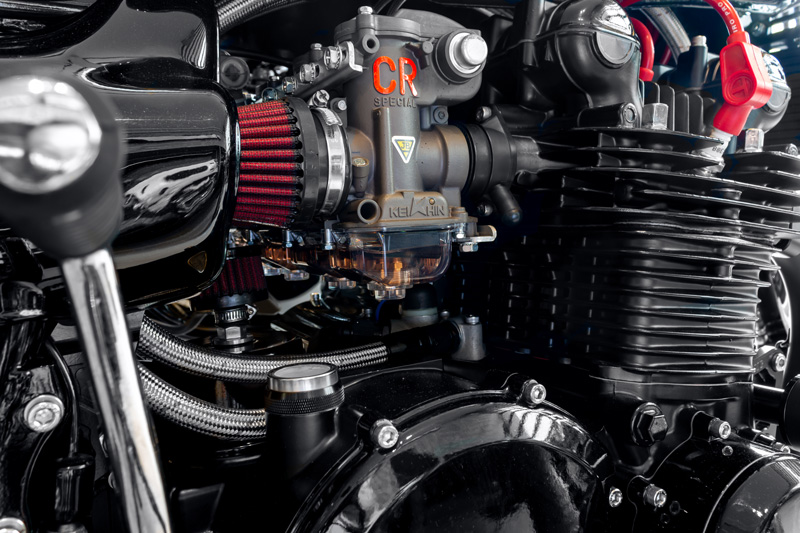
I've been tempted by these new releases from PMC out of Japan. The go on Keihin CR carbs:

Please Log in or Create an account to join the conversation.
- vict182
-

- Offline
- User
-
Registered
- Posts: 65
- Thanks: 1
Re: UPDATE 4/01/26-Experimental alternative to a clear tube when setting fuel level.
14 Sep 2021 09:35
Hello everyone
sorry for my bad english
I am tinkering with fuel level of a z1 carb rack and i am studying all the great info here
I have a thought about to determine the real fuel level to aim for
I think what is crucial is to understand if the horizontal holes of the choke tube coming down from the carb body and are designed to be clear of fuel or under fuel level
Those holes are just around there where the fuel level is supposed to be
In my opinon they look like vent holes which are supposed to be above fuel level just like the horizontal holes in the emulsion tube and in the pilot jet.
If this is correct then the fuel level has to be set just below those holes and the glass method will come very useful for this process
Does it make sense to anyone?
Thank you
sorry for my bad english
I am tinkering with fuel level of a z1 carb rack and i am studying all the great info here
I have a thought about to determine the real fuel level to aim for
I think what is crucial is to understand if the horizontal holes of the choke tube coming down from the carb body and are designed to be clear of fuel or under fuel level
Those holes are just around there where the fuel level is supposed to be
In my opinon they look like vent holes which are supposed to be above fuel level just like the horizontal holes in the emulsion tube and in the pilot jet.
If this is correct then the fuel level has to be set just below those holes and the glass method will come very useful for this process
Does it make sense to anyone?
Thank you
The following user(s) said Thank You: Gdizard
Please Log in or Create an account to join the conversation.
- slmjim+Z1BEBE
-
Topic Author
- Offline
- User
-
Registered
- Enjoy Life! IT HAS AN EXPIRATION DATE!
- Posts: 1563
- Thanks: 1044
Re: UPDATE 4/01/26-Experimental alternative to a clear tube when setting fuel level.
22 May 2024 07:19 - 22 May 2024 19:46
This project has not come to a standstill.
We obtained the lab hydrometer and graduated cylinder needed to test the specific gravity, sometimes also referred to as relative density, of various fuels and other fluids back in mid-2023, and have made significant progress in finding safer alternatives to gasoline when setting float levels in a climate-controlled (heated in winter) indoor / residential basement shop environment.
To date, we've been looking at liquids that match specific gravity & float levels as closely as possible to pure, 100% gasoline. Using 100% gasoline should eliminate whatever variability might occur with 10% ethanol summer & winter blends.
There is a gasoline fuel injector calibration fluid suggested earlier in this thread that is very promising so far, but at $78.00/gal. the stuff isn't cheap. Once we have a repeatable baseline for that, as well as 100% pure gasoline, we'll begin testing distilled water in an attempt to ascertain the exact difference in actual float level.
Over the last 6 months, a local custom lab equipment glassblower has produced a handful of dummy 'float bowls' (modified lab beakers) for our testing based on our ongoing specs & suggestions. Here is the first rough prototype from late last year:
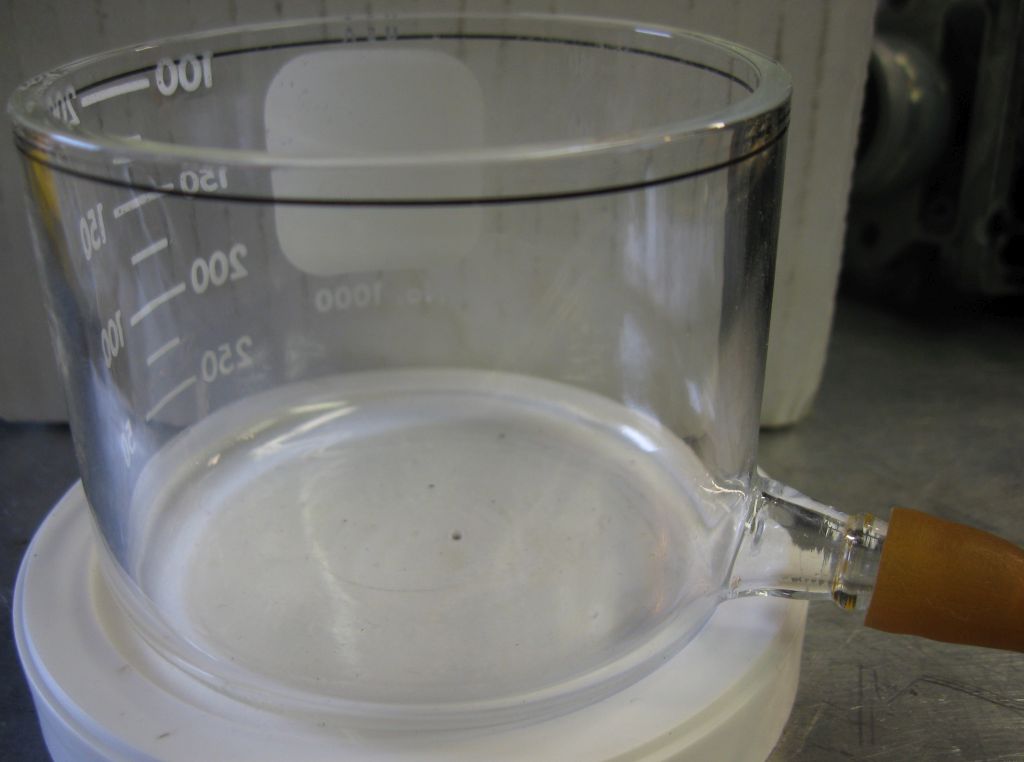
The glassblower has been very interested & cooperative in this project, offering good suggestions as we try different configurations of graduation marks & beaker depths. Different configurations can be produced based on need. We're only testing for Z1 VM28SS carbs.
Every prototype incorporates a drain barb close to the bottom that a 3/8" ~ 5/16" hose can be attached to for convenience & neatness. He also applies a fuel-proof ceramic graduation line 3mm below the top edge of the vessel, prior to kiln firing, for easy visual evaluation of liquid level. We're also evaluating graduation line colors (black & green so far), as well as a solid line all the way around vs. a broken line at 3mm and, a version with staggered broken lines at 3mm and 4mm below the top edge.
We posted a request in the 'WANTED' sub-forum for a set of 4 old carb holders suitable for mounting a rack of Z1 VM28SS carbs to a board to allow for some vertical adjustability, because the prototype glassware varies in height a little. Being able to support & vertically adjust a rack of carbs will ease testing & development of this custom glassware significantly.
Been a fun & educational project so far. Not cheap, but education usually comes with costs. There will be some additional, very detailed, arcane & (maybe) borderline eyes-glaze-over stuff to come, likely in a new thread.
Good Ridin'
slmjim & Z1BEBE
We obtained the lab hydrometer and graduated cylinder needed to test the specific gravity, sometimes also referred to as relative density, of various fuels and other fluids back in mid-2023, and have made significant progress in finding safer alternatives to gasoline when setting float levels in a climate-controlled (heated in winter) indoor / residential basement shop environment.
To date, we've been looking at liquids that match specific gravity & float levels as closely as possible to pure, 100% gasoline. Using 100% gasoline should eliminate whatever variability might occur with 10% ethanol summer & winter blends.
There is a gasoline fuel injector calibration fluid suggested earlier in this thread that is very promising so far, but at $78.00/gal. the stuff isn't cheap. Once we have a repeatable baseline for that, as well as 100% pure gasoline, we'll begin testing distilled water in an attempt to ascertain the exact difference in actual float level.
Over the last 6 months, a local custom lab equipment glassblower has produced a handful of dummy 'float bowls' (modified lab beakers) for our testing based on our ongoing specs & suggestions. Here is the first rough prototype from late last year:
The glassblower has been very interested & cooperative in this project, offering good suggestions as we try different configurations of graduation marks & beaker depths. Different configurations can be produced based on need. We're only testing for Z1 VM28SS carbs.
Every prototype incorporates a drain barb close to the bottom that a 3/8" ~ 5/16" hose can be attached to for convenience & neatness. He also applies a fuel-proof ceramic graduation line 3mm below the top edge of the vessel, prior to kiln firing, for easy visual evaluation of liquid level. We're also evaluating graduation line colors (black & green so far), as well as a solid line all the way around vs. a broken line at 3mm and, a version with staggered broken lines at 3mm and 4mm below the top edge.
We posted a request in the 'WANTED' sub-forum for a set of 4 old carb holders suitable for mounting a rack of Z1 VM28SS carbs to a board to allow for some vertical adjustability, because the prototype glassware varies in height a little. Being able to support & vertically adjust a rack of carbs will ease testing & development of this custom glassware significantly.
Been a fun & educational project so far. Not cheap, but education usually comes with costs. There will be some additional, very detailed, arcane & (maybe) borderline eyes-glaze-over stuff to come, likely in a new thread.
Good Ridin'
slmjim & Z1BEBE
A biker looks at your engine and chrome.
A Rider looks at your odometer and tags.
USA
1973 ('72 builds) Z1 x2
1974 Z1-A x2
1975 Z1-B x2
1993 CB 750 Nighthawk
2009 ST1300A
www.kawasaki-z-classik.com
A Forum tightly focused on all things Z1 and Z2.
A Rider looks at your odometer and tags.
USA
1973 ('72 builds) Z1 x2
1974 Z1-A x2
1975 Z1-B x2
1993 CB 750 Nighthawk
2009 ST1300A
www.kawasaki-z-classik.com
A Forum tightly focused on all things Z1 and Z2.
Last edit: 22 May 2024 19:46 by slmjim+Z1BEBE.
The following user(s) said Thank You: sf4t7, chopper1963, Nerdy, Gdizard, Wookie58
Please Log in or Create an account to join the conversation.
- slmjim+Z1BEBE
-
Topic Author
- Offline
- User
-
Registered
- Enjoy Life! IT HAS AN EXPIRATION DATE!
- Posts: 1563
- Thanks: 1044
Re: UPDATE 4/01/26-Experimental alternative to a clear tube when setting fuel level.
19 Jun 2025 07:55
As noted, we engaged the expertise of a custom glassblower that specializes in laboratory glassware to make some glass vessels specifically for setting Z1 3mm float height. Other dimensions and calibrations would be possible.
We desired something more elegant and convenient than the shallow bar-glass prototype with the glass-cutter-etched 3mm line in this OP.
We tested about a half-dozen iterations, wherein they made Pyrex vessels with very thin (0.3mm ~ 0.5mm), ceramic, colored calibration lines permanently fired onto the glass, precisely 3mm from the top edge. We tested solid lines, dashed lines, red, green and black, lines spaced in 1mm increments either side of 3mm. This was not an inexpensive project.
Glass vessels are surprisingly difficult to photograph. We only very recently found some detailed info on doing so without unwanted artifacts. We'll add photos of the different iterations of line colors, spacing & solid vs dashed as we get pics worthy of posting.
As a lark, we asked the glassblower to made a few short, calibrated tubes, similar to the float height tool with calibrated lines that Mama Kaw offered as a special tool in the day. We'll post pics when we get some good ones.
We will also post the final results of our testing of the relative density/specific gravity of the many different liquids considered in our search for convenient & benign fluids for float height setting in an enclosed home basement workshop environment.
We'd also like to take this opportunity to acknowledge member Mikaw for his help with items needed to make an adjustable full-rack stand for testing float height on full racks. We've been remiss in doing so.
If anyone is interested in acquiring custom glassware from the lab glassblower, their info is below.
Custom Glassblowing of Louisville, Inc.
8812 Beulah Church Rd.
Louisville, KY 40291
502/239-2215
jimmy@customglassblowing.com
Custom Glassblowing of Louisville could likely make items of any practical design. For the Z1-specific glassware items as tested:
Ask Jimmy to see quote# Q-00022959.
Part# B-1170-001 - Custom beaker w/hose barb, two solid calibration lines @ 3mm and 4mm below top.
Part# B-1170-002 - Custom beaker w/hose barb, dashed calibration lines @ 3mm and 4mm below top.
Part# T-4400-001 - Custom carb float adjustment tube, vented, 1/4" hose barb, five calibration lines.
(NOTE: the descriptions above are simplified for brevity. The full, detailed descriptions are much longer. Jimmy will know exactly what they are.)
Disclaimer: we are in no way commercially associated, with nor do or will we realize any profit from or compensation for, referrals to Custom Glassblowing of Louisville, Inc. We offer this contact info only for the benefit & convenience of our forum membership based on our development testing & personal experience.
Good Ridin'
slmjim & Z1BEBE
We desired something more elegant and convenient than the shallow bar-glass prototype with the glass-cutter-etched 3mm line in this OP.
We tested about a half-dozen iterations, wherein they made Pyrex vessels with very thin (0.3mm ~ 0.5mm), ceramic, colored calibration lines permanently fired onto the glass, precisely 3mm from the top edge. We tested solid lines, dashed lines, red, green and black, lines spaced in 1mm increments either side of 3mm. This was not an inexpensive project.
Glass vessels are surprisingly difficult to photograph. We only very recently found some detailed info on doing so without unwanted artifacts. We'll add photos of the different iterations of line colors, spacing & solid vs dashed as we get pics worthy of posting.
As a lark, we asked the glassblower to made a few short, calibrated tubes, similar to the float height tool with calibrated lines that Mama Kaw offered as a special tool in the day. We'll post pics when we get some good ones.
We will also post the final results of our testing of the relative density/specific gravity of the many different liquids considered in our search for convenient & benign fluids for float height setting in an enclosed home basement workshop environment.
We'd also like to take this opportunity to acknowledge member Mikaw for his help with items needed to make an adjustable full-rack stand for testing float height on full racks. We've been remiss in doing so.
If anyone is interested in acquiring custom glassware from the lab glassblower, their info is below.
Custom Glassblowing of Louisville, Inc.
8812 Beulah Church Rd.
Louisville, KY 40291
502/239-2215
jimmy@customglassblowing.com
Custom Glassblowing of Louisville could likely make items of any practical design. For the Z1-specific glassware items as tested:
Ask Jimmy to see quote# Q-00022959.
Part# B-1170-001 - Custom beaker w/hose barb, two solid calibration lines @ 3mm and 4mm below top.
Part# B-1170-002 - Custom beaker w/hose barb, dashed calibration lines @ 3mm and 4mm below top.
Part# T-4400-001 - Custom carb float adjustment tube, vented, 1/4" hose barb, five calibration lines.
(NOTE: the descriptions above are simplified for brevity. The full, detailed descriptions are much longer. Jimmy will know exactly what they are.)
Disclaimer: we are in no way commercially associated, with nor do or will we realize any profit from or compensation for, referrals to Custom Glassblowing of Louisville, Inc. We offer this contact info only for the benefit & convenience of our forum membership based on our development testing & personal experience.
Good Ridin'
slmjim & Z1BEBE
A biker looks at your engine and chrome.
A Rider looks at your odometer and tags.
USA
1973 ('72 builds) Z1 x2
1974 Z1-A x2
1975 Z1-B x2
1993 CB 750 Nighthawk
2009 ST1300A
www.kawasaki-z-classik.com
A Forum tightly focused on all things Z1 and Z2.
A Rider looks at your odometer and tags.
USA
1973 ('72 builds) Z1 x2
1974 Z1-A x2
1975 Z1-B x2
1993 CB 750 Nighthawk
2009 ST1300A
www.kawasaki-z-classik.com
A Forum tightly focused on all things Z1 and Z2.
The following user(s) said Thank You: KZQ, Gdizard, kimchella
Please Log in or Create an account to join the conversation.
- kimchella
-

- Offline
- Sustaining Member
-

Registered
- Posts: 300
- Thanks: 288
Re: UPDATE 4/01/26-Experimental alternative to a clear tube when setting fuel level.
19 Jun 2025 20:17
Great information and updates 👍👍 just rebuilding my original carbs, and this method made life so easy,
KZ650B1 frame number 225
New Zealand
New Zealand
The following user(s) said Thank You: slmjim+Z1BEBE, Gdizard
Please Log in or Create an account to join the conversation.
- slmjim+Z1BEBE
-
Topic Author
- Offline
- User
-
Registered
- Enjoy Life! IT HAS AN EXPIRATION DATE!
- Posts: 1563
- Thanks: 1044
Re: UPDATE 4/01/26-Experimental alternative to a clear tube when setting fuel level.
01 Apr 2026 05:17 - 02 Apr 2026 03:02
April 1, 2026. No foolin'
 .
.
Here’s the next installment of our ongoing project to ease float setting on Z1 carbs. The basic project would likely work on other carbs that use the clear tube method, with the only major difference in cups possibly being diameter, depth and, graduation(s) near the lip of the measuring cup.
A short review from where we left off from our OP at the top of this thread is in order before we continue. If you, dear reader, haven't read the OP in it's entirety or, ideally the entirety of this thread please do, so this update will make the most sense.
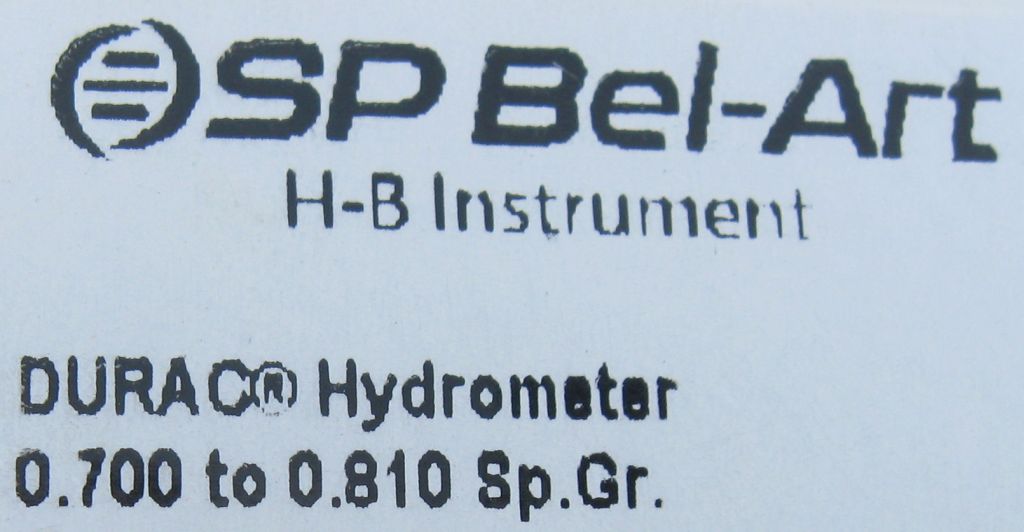
We bought a good lab-grade fluid hydrometer with a range of 0.70 to 0.81, and a tall enough graduated flask to float the hydrometer, to test specific gravity (SG) of fluids. See OP, our earlier updates, and helpful contributions from other KZR members for more details on SG.
The hydrometer:


Graduated flask:
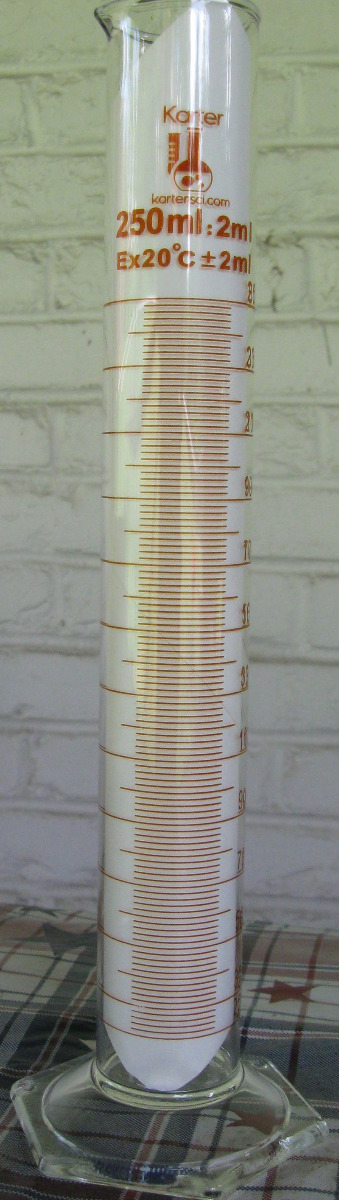
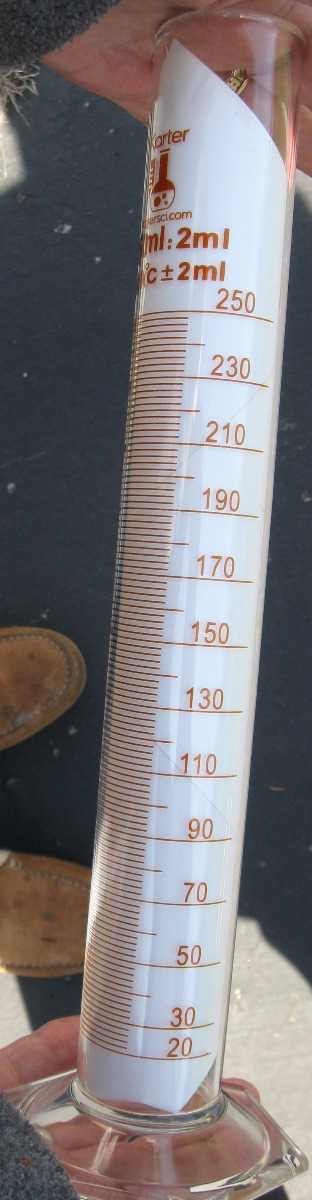
About 15 in. base-to-top It doesn’t hold much volume, but is tall enough & just large enough in dia. to allow the hydrometer to float freely near the top of its scale. The graduations on the flask weren’t needed, as fluid level exceeded the topmost graduations using some fluids anyway, and we don't care about precise volume for this project. We inserted a sheet of paper into it only to contrast the graduations.
We tested SG of many common fluids one might have in the household and shop. Many were entirely off the scale of the hydrometer or, far below the necessary range of gasoline to be useful, . None matched gasoline, so were of no interest.
SG of pure gasoline ranges ranges from 0.71 to 0.77. It measures 0.731 on our hydrometer @ 15 deg. C.
SG of E10 ranges from 0.74 ~ 0.78. It measures 0.738 on our hydrometer @ 15 deg. C. E10 SG is slightly more variable than pure gasoline due to formulation differences.
During testing, we saw that a difference in SG of at least 0.05 or so, although seemingly significant, must be evident to make a barely-discernible difference in observed carb float level, whether using FICF (see below) or gasoline.
In the OP, we left off with identifying ‘Fuel Injector Calibration Fluid’* (FICF*), available on fleaBay** & elsewhere**, as a potential substitute for gasoline. This was a driving force for us to buy the hydrometer and flask, as the SG wasn’t posted in the original fleaBay specs. It wasn’t until we asked a few times that the manufacturer indicated the SG of Fuel Injector Calibration Fluid’ is 0.74. That’s exactly what we measured, and well within the useful range for clear tube setting as a much safer substitute for gasoline in an indoor shop setting.
FICF is combustible, rather than flammable, with a flash point of approx. +174 deg. F. Nowhere near as volatile as gasoline, that has a flash point of approx. -47 deg. F., well below zero. FICF has a very mild, unobjectionable, kerosene-like odor. Toxicity for skin exposure is low, but wear chemical-resistant gloves anyway. It will very eventually evaporate, albeit slowly, leaving behind no discernible residue except on glass, when it leaves behind a faint rainbow sheen. We have absolutely no qualms with using FICF in the dead of winter in our basement shop that has a natural gas water heater with a standing pilot light that's well away from the bike service bay.
Now, on to new info:
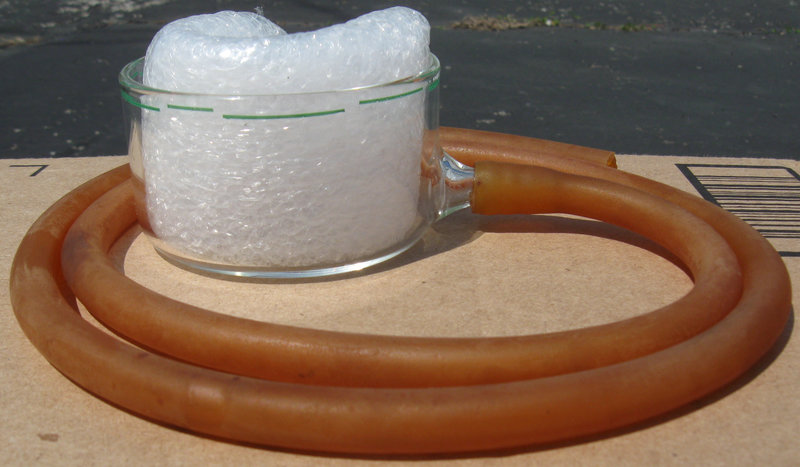
A cup with drain barb that has green, dashed, offset calibration lines at 3mm and 4mm was commissioned from the glassblower. We spec’d the cup with dashed green calibration lines this time, as black is difficult to see against the fluid meniscus under some shop lighting conditions. The 1mm vertical offsets help with accuracy. This image shows a sheet of white plastic sheet foam inserted for contrast:
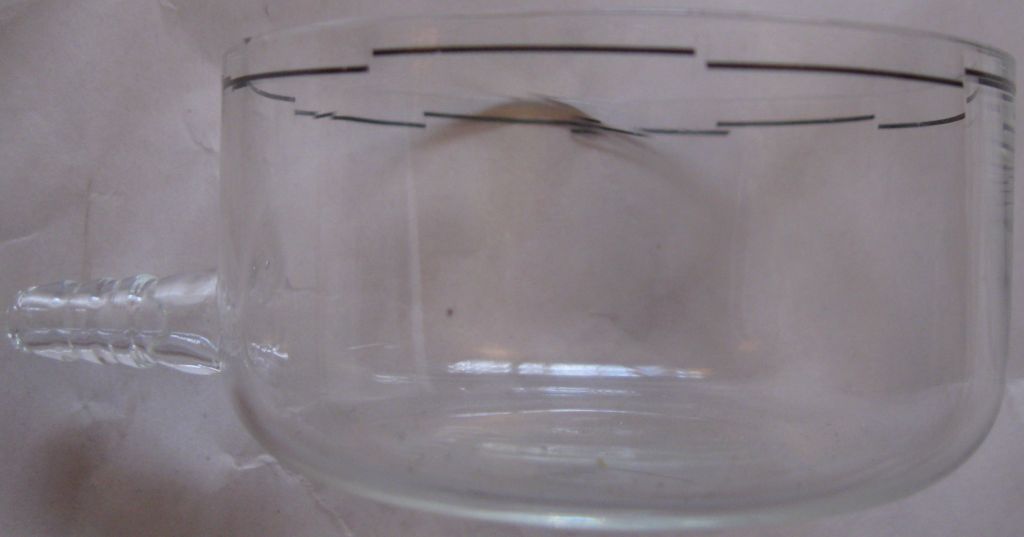
Other different prototype cups we tried are seen below. A few more are in our earlier updates. Clear glass is tricky to photograph, so the image of the black dashed lines is confusing, as the foreground dashes are at the top, with the lower dashes in the background visible (although somewhat distorted) thorough the glass, but lack visual depth:
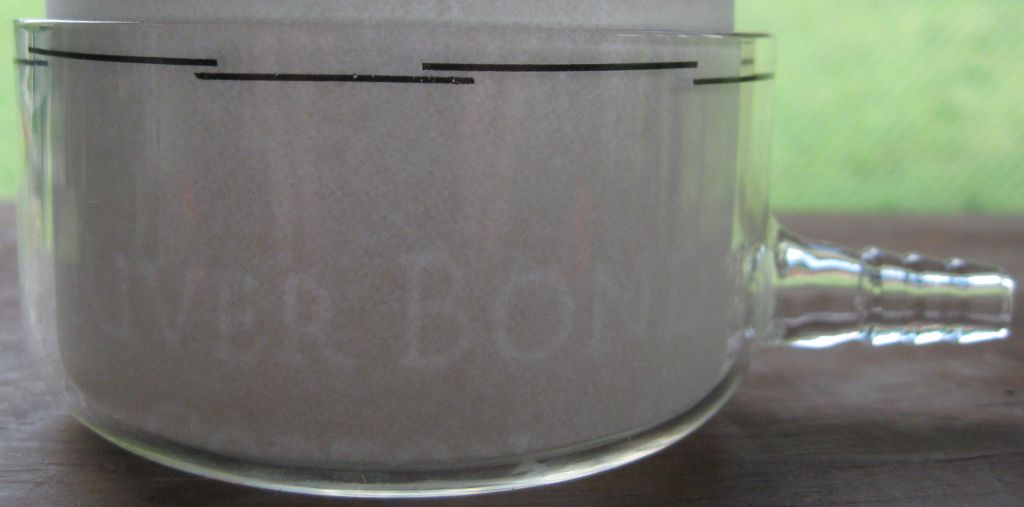

Red lines would be preferable, but the glass shop doesn’t stock it, and they have to buy ceramic line decals of any color in expensive quantities. We looked into buying some ourselves, but the stuff truly is cost prohibitive. The green, offset 2mm / 3mm dashed-line cup has become by far our favorite.
Using FICF, we set a rack of carbs to 3mm ~ 3.5 mm below the edge of the carb bodies. We then tested with E10 (outdoors) to evaluate accuracy. We chose to use E10 this time because it’s by far the most common in out area. Formulation of E10 varies twice yearly here. We used fresh winter blend E10. We'll test with summer E10 when it's available.
There was no discernible difference between winter blend E10 and FICF within the resolution of the green dashed calibration lines.
Next we tried distilled water just out of curiosity. When the floats were set to 3mm ~ 3.5mm with FICF or E10, water level was at 6mm below the edge of the carb body. In other words, 3mm below the nominal 3mm spec’d by Mama Kaw. So if one was inclined to use distilled water as a float setting fluid, 6mm below the edge of the carb body should be very close to correct. The meniscus of distilled water is somewhat different from FICF of gasoline, so care must be taken to observe the flat fluid level (see OP) for greatest accuracy. Note that this is a data point of one (1). If anyone does setting with distilled water, please share your experience re: accuracy when gasoline is introduced.
The experimental short, graduated clear glass tube, rough prototypes we commissioned. A hose barb at one end, a small drain hole at the other.
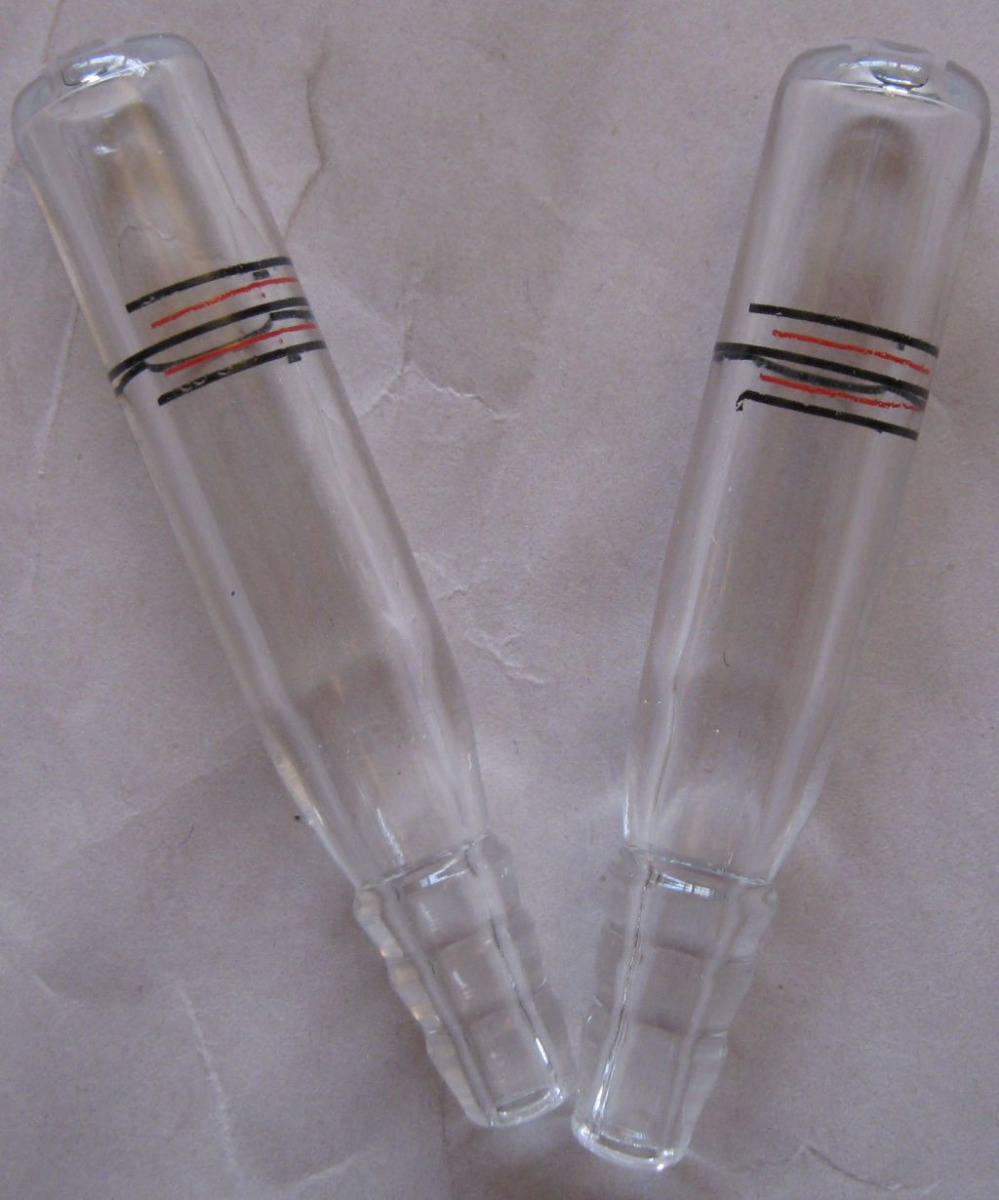
These work identically to Mama Kaw’s hard plastic, graduated tube that was part of the OEM Z1 float tools. Maybe useful for a quick & dirty fuel level test with carbs mounted on the bike, but simple clear tubing of appropriate ID would work just as well. The glassblower shop had a tiny quantity of thin, red ceramic solid-line decal they used for these. We’d prefer the red lines to be thicker. Again, background lines visible through the glass look confusing, because the pic lacks depth.
And so concludes our latest installment of our alternative float setting project. If anyone has additional input, suggestions etc., please share.
We have a few more experiments in mind. Nothing major, just curiosity stuff unlikely to change anything, and will update this thread as needed.
Ordering info from the lab glassblower shop we used is in an earlier post, or available on request. We have no affiliation with the glass shop, financial or otherwise. If one lives close enough to a population center, any of these glass works could be reproduced by a competent glassblower that specializes in custom laboratory glass.
This project has been interesting, very educational & hugely fun. For slmjim at least. Not so much for The Lovely Z1BEBE ( "...When you gonna come upstairs for lunch / dinner / bed...?" ) Very time consuming, somewhat expensive, but well worth it. After all, what price a fun education?.
Good Ridin'
slmjim & Z1BEBE
* Isoparaffinic Hydrocarbon. SG ranges between 0.74 ~ 0.79. FICF is only one of a handful of Isoparaffinic Hydrocarbons. FICF is considered an Isopar M/V. Perfect for a gasoline substitute for our purposes. Details of Isoparaffinic Hydrocarbons are far beyond the scope of this project. Easily researched if one wishes to do so.
** Very important that FICF for gasoline injectors is obtained, as calibration fluid for Diesel injectors is also commonly available, and not the same SG. Obtaining calibration fluid for Diesel injectors would be an expensive mistake.
Here’s the next installment of our ongoing project to ease float setting on Z1 carbs. The basic project would likely work on other carbs that use the clear tube method, with the only major difference in cups possibly being diameter, depth and, graduation(s) near the lip of the measuring cup.
A short review from where we left off from our OP at the top of this thread is in order before we continue. If you, dear reader, haven't read the OP in it's entirety or, ideally the entirety of this thread please do, so this update will make the most sense.
We bought a good lab-grade fluid hydrometer with a range of 0.70 to 0.81, and a tall enough graduated flask to float the hydrometer, to test specific gravity (SG) of fluids. See OP, our earlier updates, and helpful contributions from other KZR members for more details on SG.
The hydrometer:
Graduated flask:
About 15 in. base-to-top It doesn’t hold much volume, but is tall enough & just large enough in dia. to allow the hydrometer to float freely near the top of its scale. The graduations on the flask weren’t needed, as fluid level exceeded the topmost graduations using some fluids anyway, and we don't care about precise volume for this project. We inserted a sheet of paper into it only to contrast the graduations.
We tested SG of many common fluids one might have in the household and shop. Many were entirely off the scale of the hydrometer or, far below the necessary range of gasoline to be useful, . None matched gasoline, so were of no interest.
SG of pure gasoline ranges ranges from 0.71 to 0.77. It measures 0.731 on our hydrometer @ 15 deg. C.
SG of E10 ranges from 0.74 ~ 0.78. It measures 0.738 on our hydrometer @ 15 deg. C. E10 SG is slightly more variable than pure gasoline due to formulation differences.
During testing, we saw that a difference in SG of at least 0.05 or so, although seemingly significant, must be evident to make a barely-discernible difference in observed carb float level, whether using FICF (see below) or gasoline.
In the OP, we left off with identifying ‘Fuel Injector Calibration Fluid’* (FICF*), available on fleaBay** & elsewhere**, as a potential substitute for gasoline. This was a driving force for us to buy the hydrometer and flask, as the SG wasn’t posted in the original fleaBay specs. It wasn’t until we asked a few times that the manufacturer indicated the SG of Fuel Injector Calibration Fluid’ is 0.74. That’s exactly what we measured, and well within the useful range for clear tube setting as a much safer substitute for gasoline in an indoor shop setting.
FICF is combustible, rather than flammable, with a flash point of approx. +174 deg. F. Nowhere near as volatile as gasoline, that has a flash point of approx. -47 deg. F., well below zero. FICF has a very mild, unobjectionable, kerosene-like odor. Toxicity for skin exposure is low, but wear chemical-resistant gloves anyway. It will very eventually evaporate, albeit slowly, leaving behind no discernible residue except on glass, when it leaves behind a faint rainbow sheen. We have absolutely no qualms with using FICF in the dead of winter in our basement shop that has a natural gas water heater with a standing pilot light that's well away from the bike service bay.
Now, on to new info:
A cup with drain barb that has green, dashed, offset calibration lines at 3mm and 4mm was commissioned from the glassblower. We spec’d the cup with dashed green calibration lines this time, as black is difficult to see against the fluid meniscus under some shop lighting conditions. The 1mm vertical offsets help with accuracy. This image shows a sheet of white plastic sheet foam inserted for contrast:
Other different prototype cups we tried are seen below. A few more are in our earlier updates. Clear glass is tricky to photograph, so the image of the black dashed lines is confusing, as the foreground dashes are at the top, with the lower dashes in the background visible (although somewhat distorted) thorough the glass, but lack visual depth:
Red lines would be preferable, but the glass shop doesn’t stock it, and they have to buy ceramic line decals of any color in expensive quantities. We looked into buying some ourselves, but the stuff truly is cost prohibitive. The green, offset 2mm / 3mm dashed-line cup has become by far our favorite.
Using FICF, we set a rack of carbs to 3mm ~ 3.5 mm below the edge of the carb bodies. We then tested with E10 (outdoors) to evaluate accuracy. We chose to use E10 this time because it’s by far the most common in out area. Formulation of E10 varies twice yearly here. We used fresh winter blend E10. We'll test with summer E10 when it's available.
There was no discernible difference between winter blend E10 and FICF within the resolution of the green dashed calibration lines.
Next we tried distilled water just out of curiosity. When the floats were set to 3mm ~ 3.5mm with FICF or E10, water level was at 6mm below the edge of the carb body. In other words, 3mm below the nominal 3mm spec’d by Mama Kaw. So if one was inclined to use distilled water as a float setting fluid, 6mm below the edge of the carb body should be very close to correct. The meniscus of distilled water is somewhat different from FICF of gasoline, so care must be taken to observe the flat fluid level (see OP) for greatest accuracy. Note that this is a data point of one (1). If anyone does setting with distilled water, please share your experience re: accuracy when gasoline is introduced.
The experimental short, graduated clear glass tube, rough prototypes we commissioned. A hose barb at one end, a small drain hole at the other.
These work identically to Mama Kaw’s hard plastic, graduated tube that was part of the OEM Z1 float tools. Maybe useful for a quick & dirty fuel level test with carbs mounted on the bike, but simple clear tubing of appropriate ID would work just as well. The glassblower shop had a tiny quantity of thin, red ceramic solid-line decal they used for these. We’d prefer the red lines to be thicker. Again, background lines visible through the glass look confusing, because the pic lacks depth.
And so concludes our latest installment of our alternative float setting project. If anyone has additional input, suggestions etc., please share.
We have a few more experiments in mind. Nothing major, just curiosity stuff unlikely to change anything, and will update this thread as needed.
Ordering info from the lab glassblower shop we used is in an earlier post, or available on request. We have no affiliation with the glass shop, financial or otherwise. If one lives close enough to a population center, any of these glass works could be reproduced by a competent glassblower that specializes in custom laboratory glass.
This project has been interesting, very educational & hugely fun. For slmjim at least. Not so much for The Lovely Z1BEBE ( "...When you gonna come upstairs for lunch / dinner / bed...?" ) Very time consuming, somewhat expensive, but well worth it. After all, what price a fun education?.
Good Ridin'
slmjim & Z1BEBE
* Isoparaffinic Hydrocarbon. SG ranges between 0.74 ~ 0.79. FICF is only one of a handful of Isoparaffinic Hydrocarbons. FICF is considered an Isopar M/V. Perfect for a gasoline substitute for our purposes. Details of Isoparaffinic Hydrocarbons are far beyond the scope of this project. Easily researched if one wishes to do so.
** Very important that FICF for gasoline injectors is obtained, as calibration fluid for Diesel injectors is also commonly available, and not the same SG. Obtaining calibration fluid for Diesel injectors would be an expensive mistake.
A biker looks at your engine and chrome.
A Rider looks at your odometer and tags.
USA
1973 ('72 builds) Z1 x2
1974 Z1-A x2
1975 Z1-B x2
1993 CB 750 Nighthawk
2009 ST1300A
www.kawasaki-z-classik.com
A Forum tightly focused on all things Z1 and Z2.
A Rider looks at your odometer and tags.
USA
1973 ('72 builds) Z1 x2
1974 Z1-A x2
1975 Z1-B x2
1993 CB 750 Nighthawk
2009 ST1300A
www.kawasaki-z-classik.com
A Forum tightly focused on all things Z1 and Z2.
Last edit: 02 Apr 2026 03:02 by slmjim+Z1BEBE. Reason: Clarity
The following user(s) said Thank You: TexasKZ, Nerdy, Wookie58, kimchella
Please Log in or Create an account to join the conversation.
- hardrockminer
-
- Offline
- Sustaining Member
-
Registered
- Posts: 3152
- Thanks: 1249
Re: UPDATE 4/01/26-Experimental alternative to a clear tube when setting fuel level.
01 Apr 2026 19:48
I've been using this method since you first mentioned it. I do two carbs at a time and sit them on a couple of wide brim glass tumblers. I've only encountered one problem. My wife found out I took two of her glass tumblers!
I have several restored bikes along with a 2006 Goldwing with a sidecar.
The following user(s) said Thank You: Wookie58
Please Log in or Create an account to join the conversation.
Moderators: Street Fighter LTD